
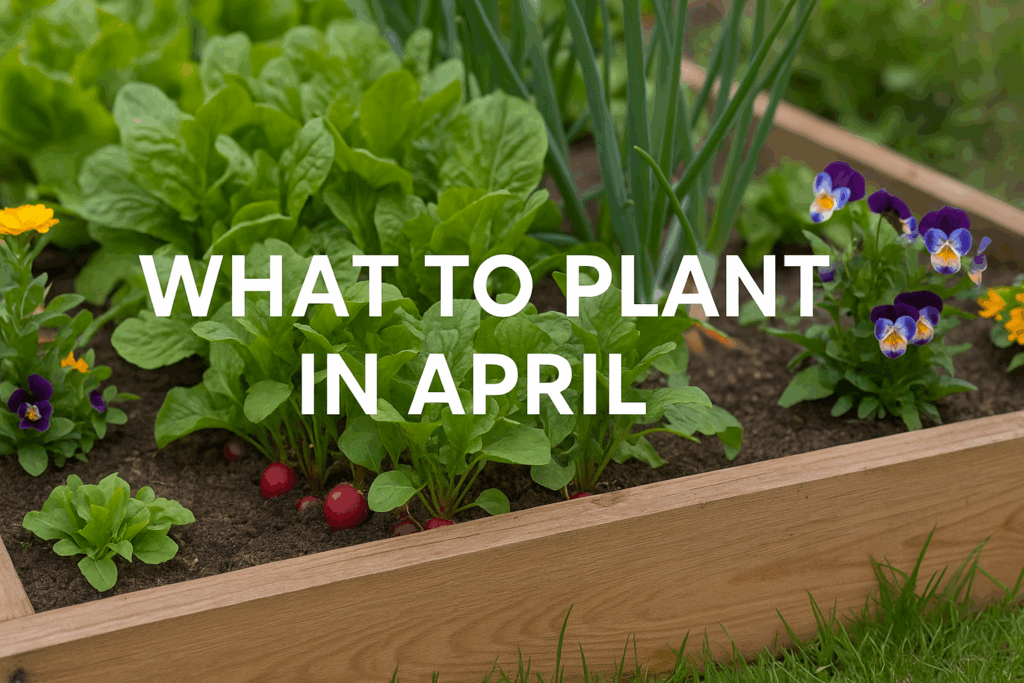
When I first started gardening, I thought neat rows and wide spaces were the goal. But nature doesn’t grow in straight lines — forests don’t leave bare soil between trees, and weeds are just plants rushing in to fill the gaps.
These days, I’ve become a believer in planting close, letting roots and leaves support each other, and using companion planting to do what pesticides never could: keep pests away, feed the soil, and outcompete weeds.
April is when the garden really wakes up. Here’s what you can plant this month — and how to tuck it together so your garden thrives like a little ecosystem.
What to Plant in April (PNW Focus)
Direct Sow (in the ground now):
- Carrots, beets, radishes
- Lettuce mixes, spinach, arugula
- Peas (sugar snap, snow, shelling)
Transplants (start indoors, plant out now):
- Brassicas: broccoli, cauliflower, cabbage
- Onions, leeks
Start Indoors for Later Transplant (still too cold outside):
- Tomatoes
- Peppers
- Squash & cucumbers (plant out in May/June)
Companion Planting & Close Spacing
Plants grow better with friends. Companion planting mimics natural ecosystems:
- Radishes between carrots: radishes grow fast, break up the soil, and are harvested before carrots fill in.
- Lettuce under brassicas: cabbage and broccoli shade lettuce, keeping it crisp and tender.
- Onions around cabbage: their smell confuses cabbage moths.
- Peas with dill or cilantro: peas add nitrogen to the soil, herbs bring in pollinators.
Close spacing = fewer weeds, more shade for the soil, and less evaporation. Think of your garden like a living quilt — tight enough that weeds don’t stand a chance.
Building Your Beds the Easy Way
If you’re starting fresh this year, don’t break your back double-digging. Beds built in layers — mulch, compost, manure, fungi, soil — create a no-dig system that naturally suppresses weeds, holds water, and feeds your plants from the ground up. Think of it like a lasagna for your garden: stack the layers, soak each one as you go, and let the microbes and worms do the hard work.
👉 I’ll share a full step-by-step No-Dig Garden Bed Guide soon, but for now, just know you don’t need tilling or chemicals to grow strong plants. Nature’s already figured out the system — we just mimic it.
Flower & Allium Borders
Don’t leave garden edges bare. Borders act like a living fence:
- Flowers (pollinators + pest traps):
- Marigolds repel nematodes + aphids.
- Nasturtiums draw pests away from veggies.
- Calendula and alyssum bring in pollinators.
- Marigolds repel nematodes + aphids.
- Alliums (pest repellents):
- Garlic, onions, chives = natural bug deterrent.
- Ring brassicas with garlic or onions to keep away moths.
- Chives near lettuce or carrots repel aphids.
- Garlic, onions, chives = natural bug deterrent.
- Herbs (ecosystem boosters):
- Dill + cilantro attract ladybugs + lacewings.
- Basil (later season) helps tomatoes grow stronger.
- Dill + cilantro attract ladybugs + lacewings.
👉 Together, flowers and alliums keep pests at bay while making your garden a pollinator’s paradise.
Homeschool Harvest Tie-In
- Math: measure spacing (tight rows vs. wide rows) and chart growth.
- Science: study root systems + companion planting “ecosystem maps.”
- Art/Nature Study: sketch your bed with flowers, veggies, and herbs in place.
- Life Skills: track harvest dates, compare yield between mixed beds vs. monocrop rows.
Cheat Sheet: April Planting at a Glance
- Sow Now: carrots, beets, radishes, lettuce, spinach, peas.
- Transplant Now: brassicas, onions, leeks.
- Start Indoors: tomatoes, peppers, squash.
- Companion Wins:
- Radish + carrot
- Lettuce + brassica
- Onion + cabbage
- Dill + peas
- Radish + carrot
- Borders: marigolds, nasturtium, calendula, garlic, onions, chives.
Gardening doesn’t have to be about fighting nature — it works best when you let plants help each other out. Fill the soil with good neighbors, edge it with flowers and alliums, and watch your April garden turn into a thriving ecosystem.
Here’s to produce and provision,
Brenna