Low-tox living meets real life — what held up, what didn’t, and where clean clothing actually matters.
I didn’t start with clothing when I began cleaning up our home. I started with food, water, skincare and the obvious stuff. But once you’ve lived through mold illness, skin sensitivity, hormone weirdness, and “why is my body reacting to everything?” seasons… you eventually realize: clothing is a daily exposure you don’t get to opt out of.
Updated January 2026 (originally drafted January 2024) to reflect two additional years of wear-testing, family sizing changes, and new insights gained during and after my Nutritional Therapy Practitioner training.
Disclosure: This post may contain affiliate links. If you choose to use them, it doesn’t cost you anything extra — it simply helps support my work and keeps these resources coming.
Why clothing matters (without the fear spiral)
Clothing isn’t just “fabric.” It’s prolonged skin contact, heat, friction, sweat, dyes, finishes, and fibers — sometimes for 8–16 hours a day. And skin is an organ. It absorbs more readily when fabric is tight, warm, damp, or constantly rubbing.
That said: this is not about replacing your entire wardrobe or chasing perfection. It’s about making the swaps that actually matter — calmly — and letting everything else be “good enough for now.”
Start where exposure is highest
If you only change a few categories, start here:
- Underwear
- Bras / bralettes
- Sleepwear
- Activewear
- Baby and kids clothing (especially pajamas and base layers)
Outerwear matters less. Your trench coat isn’t usually the hill to die on.
What actually causes problems in clothing
- Synthetic fibers worn directly on skin for long periods (especially tight or sweaty situations)
- PFAS / stain-resistant finishes (common in “water resistant,” “odor resistant,” “performance,” and “school uniform” type items)
- Dyes and chemical finishes (especially in cheaper fast fashion)
- “Antimicrobial / odor control” coatings (often marketed as helpful… and frequently not)
- Flame retardants (particularly relevant in some children’s categories)
Most of the time, the biggest wins are: fewer synthetics on skin, fewer mystery finishes, and better base layers during high-contact seasons.
What’s usually fine (and not worth stressing over)
- Outer layers you wear occasionally
- Well-washed older pieces
- Vintage items without modern finishes
- Special occasion clothing
Clean living works best when it supports your nervous system instead of becoming a second job.
My clean clothing priorities
- Natural fibers where they touch skin (especially underwear, bras, sleepwear)
- Durability (because replacing “clean” clothing every 4 months is not the vibe)
- Fit that supports real bodies (long torso solidarity)
- Simple, repeatable systems (base layers = one of the best systems I’ve found)
Base layers: the best real-world compromise I’ve found
If I were rolling in cash, my family would wear 100% natural fibers all the time. We’re not. So instead of chasing perfection, I focus on the best leverage point: base layers.
Base layers do two things:
- They reduce skin contact with synthetic outer layers (especially for kids who want to wear trendy pieces).
- They add warmth and comfort during winter and snow days without needing “performance fabric” everything.
Over the last year, I’ve purchased merino base-layer sets for my whole family — and it has been one of the most practical, peace-of-mind upgrades in our home. It also helps me relax when a kid wants to wear something that isn’t perfect: the base layer does a lot of the heavy lifting.
Coming soon: I’m planning a deeper post specifically on merino base layers for kids, teens, and adults — what runs small, what holds up, and what’s worth the money.
Brands that earned a permanent spot
Branwyn (Merino)
Branwyn is the standout for me. The durability, structure, and comfort are on another level — especially for high-rise fit and everyday wear.
- Compressive leggings (high rise that actually works for a long torso)
- Busty bra + Essential bralettes (daily staples)
- Bikini underwear (fit improved over time as the fabric adapted)
- Merino joggers and long sleeves (still look new after heavy wear)
Branwyn uses a merino-wrapped core thread for structure — which means you get durability without synthetic touching the skin. In my experience, it’s a rare tradeoff that actually makes sense.
I switched my tween daughter to the busty bra as a comfortable “workout camisole” option as well – she has super sensitive skin and the 100% cotton pieces were too harsh for her so these have saved her skin.
Note: They say you can swim in some pieces — I believe them — but I don’t personally put dyed merino into pools or hot tubs if I want it to stay pristine.
Shop Branwyn:
Namarie
Beautiful pieces, great for warm weather, and a lovely option when you want natural fibers without going full merino wardrobe.
Namarie is a brand I approach thoughtfully — and one that’s evolved in a good direction. Some of their older designs relied more heavily on elastane, which made them less ideal from a clean-fabric standpoint.
Their newer pieces, however, use a higher percentage of hemp with minimal elastane and a noticeably thicker, more substantial fabric. These updates have made a real difference in how the clothing feels, wears, and holds up.
I consider Namarie a selective option rather than an everyday staple — best for specific pieces where structure, durability, and thoughtful design matter more than being 100% fiber-pure.
Pact (Organic cotton)
Pact maternity leggings and crossover nursing bras were a lifesaver in pregnancy and postpartum. Their non-maternity line didn’t work as well for my long torso, but the maternity pieces were a win.
I’ve also consistently used Pact’s organic cotton boxer briefs for the men in our house — simple, breathable, and a solid cotton option when merino isn’t the right fit.
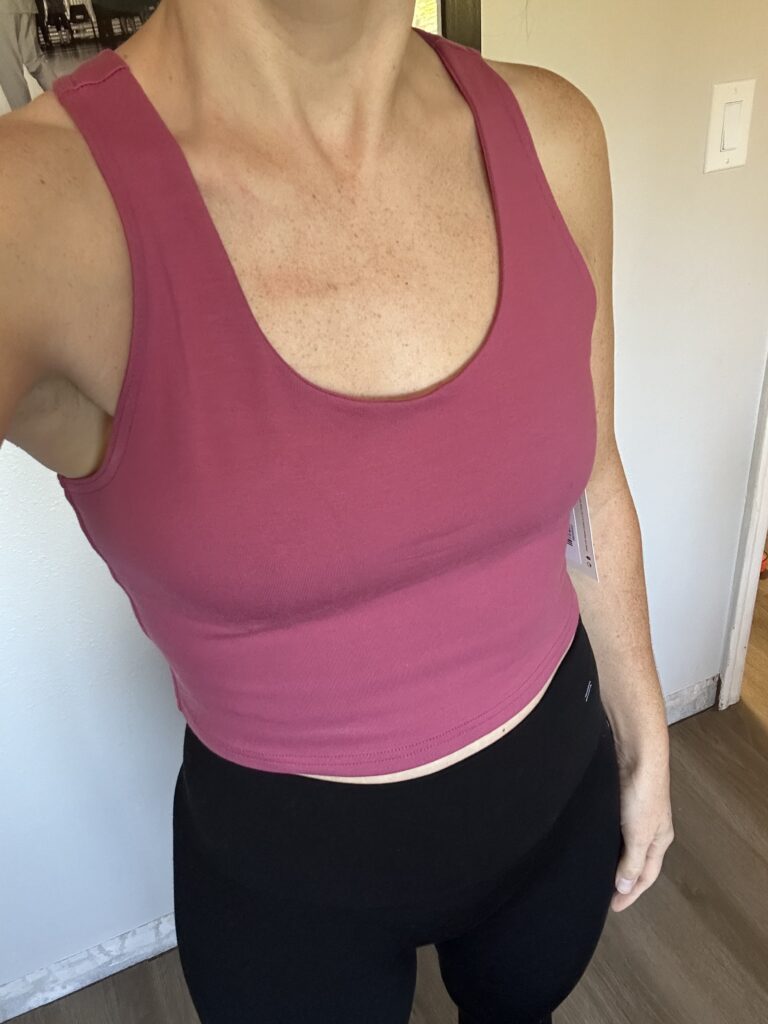
Below: Pact Organic Cotton Malaga top with Branwyn Merino Compression Leggings (I have a long torso and “long hip” for someone who is 5’7” so this combo just comes together. I don’t love working out in midriff… 4 babies and all.)
Mate the Label
Mate sits in that sweet spot between elevated and wearable. Their organic cotton pieces feel intentional without being precious — and a few of their staples have become real workhorses in our house.
I especially love their shelf camisole — it’s supportive enough to wear on its own, soft against sensitive skin, and easy to layer under knits or sweaters. Their cropped cotton leggings are another standout for me: high-waisted, flattering, and comfortable in a way that works far better for my proportions than their full-length leggings, which sat too low on my waist.
The crewneck sweatshirt has also been a surprise favorite — so much so that my daughter essentially lives in hers. Cozy, substantial, and made from organic cotton that actually holds up to real wear.
If you want organic cotton pieces that feel a little more “pulled together” without drifting into synthetic blends, Mate is a solid choice.
Quince
Quince has quietly become one of our most-used brands for affordable natural fibers — especially when outfitting multiple kids and growing teens.
We now have several of their merino base layer sets between my girls, and they’ve held up well with regular wear. They’re thinner than some premium merino options, but still effective — especially as a first-layer buffer under everyday clothing.
My husband and son both live in Quince hoodie and jogger sets, which have been an easy win for comfort without obvious synthetics. For the price point, the quality has been solid.
Quince works well as a practical middle ground: natural fibers, wearable pricing, and pieces that don’t feel overly precious for daily life. Just be sure to check the fabric composition before buying.
Organic Basics (cotton underwear & essentials)
These were a quiet win for me — especially for long hip, long torso bodies where rise actually matters.
I’ve worn their high-cut organic cotton underwear myself and also bought them for my daughter. The fit is simple, breathable, and genuinely comfortable without digging or creeping. The higher rise works far better for my proportions than some other cotton briefs I tried — particularly lower-rise lace-waist styles that just don’t work well on a longer frame.
I mostly live in merino now, but when I want cotton — or when I’m buying for teens — Organic Basics has been one of the most reliable, no-nonsense options.
Shop Organic Cotton Favorites:
Woolly
Very comfortable, but durability was inconsistent for us. The bikini brief style held up the best — but still developed holes after about a year. Some hoodies had stitching issues but remained usable.
If you’re starting out and want a more budget-friendly merino entry point, Woolly can be a decent option — just don’t expect Branwyn-level longevity.
Shop Woolly:
Boody
Soft and comfortable, but durability was a consistent issue for us (holes and fit drift). I don’t buy it as a core staple anymore.
Everyday Staples (J.Crew, Gap, Boden, Everlane, Madewell)
J.Crew is one of the most consistent “real life” brands in my closet — not just for jeans, but for basics that actually get worn. I have several of their women’s 100% cotton V-neck tees (major favorite), and I’ve also found select merino wool pieces that layer well and hold up. It’s been my go-to since my 20’s… always seeming to fit like they were tailor made for my body.
They also used to make my favorite wide-strap tank tops in their vintage cotton line — and since they discontinued them, I’ve literally hunted them down secondhand. That’s how you know something is a true staple.
For jeans, I still do best with J.Crew’s higher-rise styles (roughly 11.75–12.5”) and look for options that are 95%+ cotton with minimal stretch.
Gap is another place I’ll occasionally grab 100% cotton basics for myself or the kids — I just check fabric content carefully because it varies wildly by piece.
Boden is lovely for pieces that look more “pulled together” — especially dresses and select cotton or merino items. Their quality has generally been solid.
I also pick up the occasional piece from Everlane or Madewell, but I treat both as “fabric-first brands” — meaning I’ll buy it when the materials match my standards, not because I’m loyal to the label.
Shop Everyday Clothing Favorites:
Kids + teens + toddlers: what actually held up
One important note: I began writing this post when my older kids were still in teen sizing (roughly 16–18). As of 2026, my teen son is now in men’s sizing (men’s smalls), and the girls have shifted as well — which changes what brands are practical.
Primary (kids)
Primary is not the most durable brand we’ve owned — but they deserve credit for two big reasons:
- Replacement policy: Primary replaced multiple items that developed holes. They’ve consistently stood behind their products.
- Warm 100% cotton leggings: They were the only brand I could find that made thick, fuzzy, warm, 100% cotton leggings for girls. My girls each had multiple pairs.
- Organic Cotton Baby & Toddler Line: Their 100% cotton footed pajamas have been the softest and sturdiest cotton pajamas I could find for my toddler. She loves them, and the solid colors are a win for me. I just wish they had the soft pink and oatmeal color in the toddler size as well… but their deep cherry red is gorgeous.
They also carry adaptive pieces that can be a big deal for sensitive kids.
Shop Kids Clothing Picks:
Merino base layers (kids + family)
We’ve had good results with merino base layers as a system, especially in winter. For my middle and youngest daughters, Quince merino base layers held up well, though they’re a bit thin. For toddlers and babies, Quince tends to run small — if you’re unsure, size up.
For my toddler, I found an Australian brand called Hello Night Kids, and the thermal base layers have been some of the highest quality toddler pieces I’ve ever seen. I also picked up several of their merino zip pajamas during a Black Friday sale — they’ve been a huge win.
For older kids, we’ve loved merino.tech base layers as a practical compromise — especially on snow days and winter mornings.
Merino Base Layers (Merino.tech)
For winter and snow days, merino base layers have been one of the most practical “clean clothing” upgrades for our whole family — especially as a buffer under everyday outfits. Merino.tech has been a solid compromise for us in terms of warmth, comfort, and price point.
- Women’s Crew Thermal Set (Merino.tech)
- Women’s Zip Thermal Set (Merino.tech)
- Men’s Crew Thermal Set (Merino.tech)
- Kids Crew Thermal Set (Merino.tech)
Note: As with most base layers, fit and feel can vary by person — and some people simply don’t tolerate wool against skin (even merino). If that’s you, base layers can still be useful as an occasional tool, but comfort wins.
*As an Amazon Associate, I earn from qualifying purchases.
Woolino (Toddler Merino Sets, Sleep & Bedding):
For toddlers, I’ve had excellent experiences with Woolino’s merino sleep sacks and bedding. Their products use 100% wool interiors with thoughtful cotton covers, making them breathable, temperature-regulating, and genuinely comfortable for sensitive sleepers.
We use their 100% wool toddler pillow with a cotton cover, paired with a 100% silk pillowcase, and my toddler absolutely loves it. It’s been a gentle, non-synthetic upgrade that’s held up beautifully.
Shop Woolino + Get $10 Off Your First Order
Not everyone can tolerate wool (and that’s not a character flaw)
Some people simply do not tolerate wool well — even merino. There’s a common “itchy” sensation some experience (often called the prickle response). Sometimes it improves with time; sometimes it doesn’t. And if someone has sensory sensitivity or asthma triggers, forcing it is not worth it.
In our house, my husband does well with some merino-blend items (like certain socks), but he could not tolerate merino base layers against skin. Next step for us is testing alpaca — which is often better tolerated because it doesn’t contain lanolin. I’m still experimenting and I’ll share what we learn.
If you only wear a base layer once or twice a year, it may not be worth forcing a fiber your body hates. “Clean” should support your health, not start a fight with your nervous system.
Materials + certifications I look for
- GOTS certification when possible
- OEKO-TEX as a helpful filter for certain mainstream basics
- High-percentage natural fibers (especially for anything worn directly on skin)
In the early stages, I allowed more bamboo pieces if they were certified — but over time I’ve leaned away from bamboo-based clothing because the processing can be chemically intensive. I’m increasingly drawn to the old-world practicality of linen and wool for different seasons. I don’t make this “religious,” but I do find it interesting — and I’m continuing to learn.
Small note: I also find it interesting that Deuteronomy mentions linen and wool together — I’m not building my wardrobe theology on one verse, but I do think it’s worth more curiosity and research.
How to make clean clothing last (laundry matters)
Most “clean clothing fails” are really laundry failures — harsh detergents, hot water, rough cycles, and no wash bags.
- Use wash bags for merino, underwear, and delicate pieces
- Choose gentle detergents
- Avoid oxygen-based detergents on organic dyes (they can be rough on fabrics)
- Wash cold and skip aggressive drying when possible
Shop the picks: Clean clothing picks | All ShopMy shelves
Related Reading
- Clean Period Underwear: PFAS-Free Options That Are Actually Worth It
- Clean, Tested Period Products: Tampons, Cups & Discs That Don’t Mess With Your Microbiome
- Bio-Individuality: Why Nutrition Advice Feels So Confusing
- Merino Base Layers for Kids & Families: What Holds Up (and What Runs Small)
Related Reading
- Clean Laundry Detergent & Fabric Care (without wrecking your organic dyes)
- Clean Kitchen Equipment Swaps: Food Contact Surfaces That Matter Most
- Detox Your Home Checklist: Where to Start Without Overwhelm
This post is for educational purposes only and is not a substitute for individualized medical advice.