
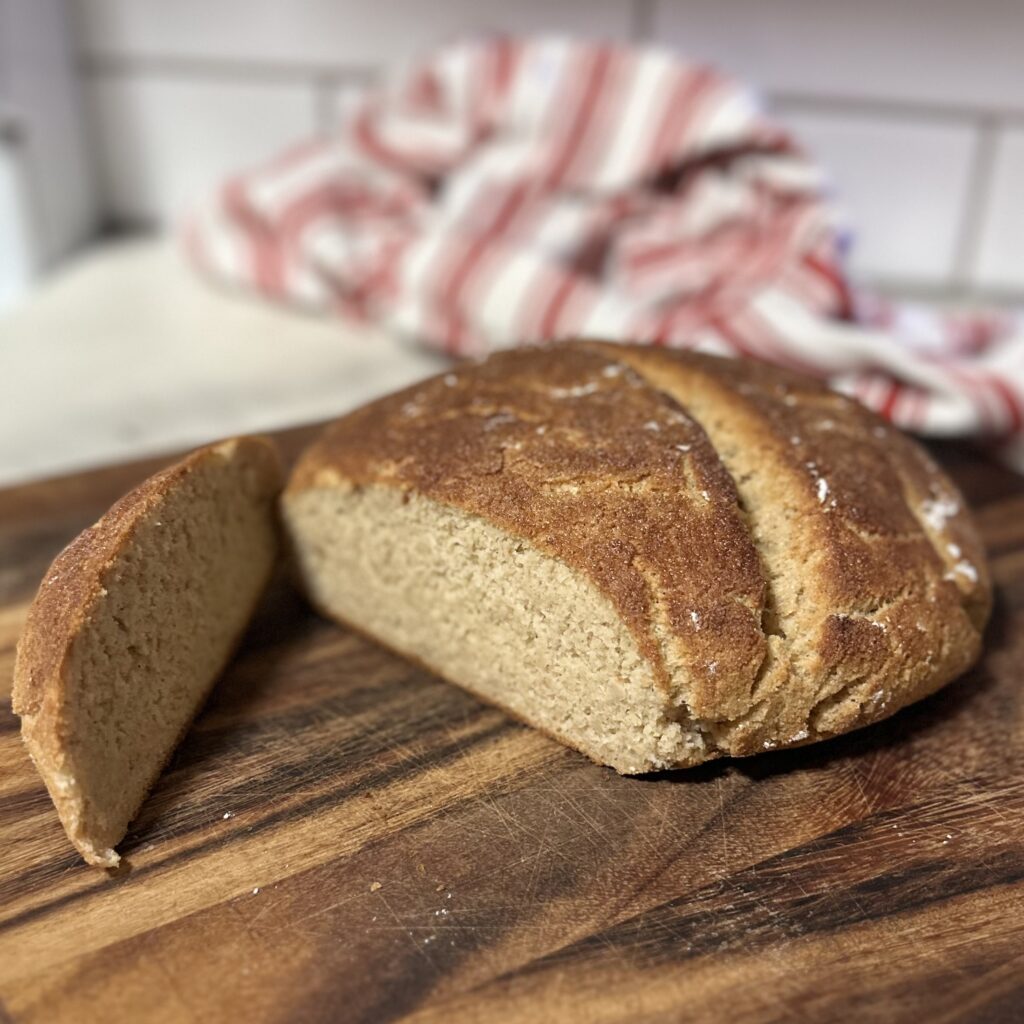
From Seeded to Smooth: Why I Built a Second Protein Sourdough
If you’ve baked my Keto Protein Seeded Sourdough Bread (Two Ways), you already know it’s a solid performer — sturdy, flavorful, and nutrient-dense enough to qualify as a functional meal. It doesn’t fall apart; it just leans more rustic.
My kids, however, made their preferences known. They love the seeded loaf warm and buttery, but when it comes to sandwich bread, they want smooth. Fair.
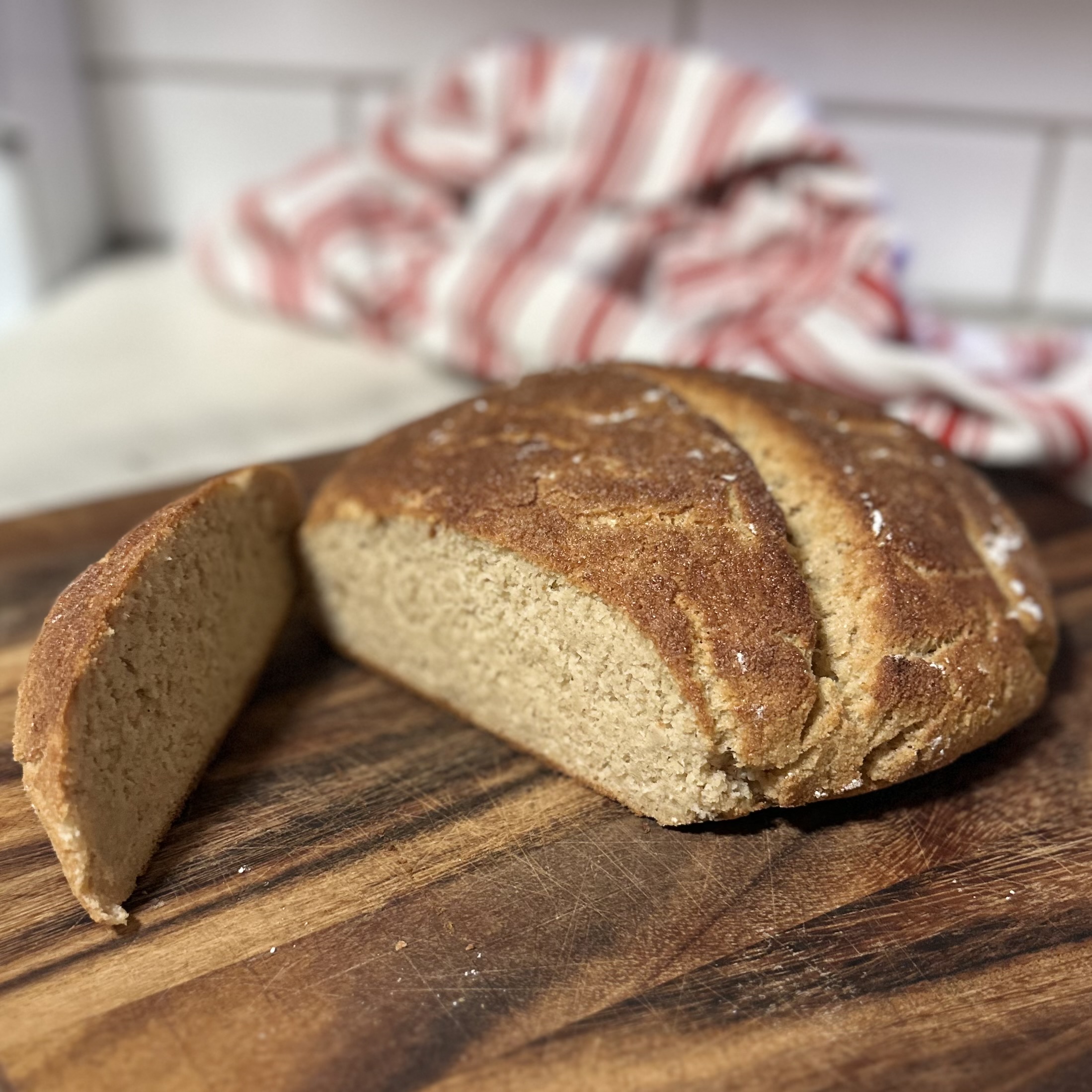
And then there’s my husband — a lifelong “white bread guy.” This version officially converted him. The Classic Artisan Boulé keeps all the protein, fiber, and gut-friendly benefits of the seeded original but swaps texture for a cleaner crumb, higher lift, and that classic sliceable feel. It toasts beautifully, holds up for sandwiches, and satisfies everyone at the table.
⬇️ Jump to Classic Artisan Boulé Recipe
The Functional Nutrition Behind the Loaf
This isn’t a “keto because it’s trendy” bread — it’s a functional food intentionally built for carb-sensitive metabolisms, especially for women in perimenopause and menopause.
1. Blood Sugar Balance + Insulin Calm
Every ingredient here was chosen to stabilize energy and hormone balance:
- Almond & coconut flour – low-glycemic, rich in minerals and fats that blunt blood sugar spikes.
- Arrowroot – a resistant starch that feeds your sourdough microbes, improving gut ecology without spiking glucose.
- Psyllium husk + konjac root – soluble fibers that slow glucose absorption and promote satiety.
- Fermented rice & teff sourdough starter (or cassava starter for grain-free/AIP) – both help lower antinutrients and improve mineral absorption, while adding that subtle sourdough tang and digestive ease.
Together, they deliver a loaf that supports glucose stability instead of derailing it.
2. Protein for Hormones & Repair
Perimenopausal women often lose lean muscle and crave more protein without realizing why. This bread quietly delivers a dose of high-quality amino acids from egg whites, collagen, and gelatin — supporting tissue repair, neurotransmitter balance, and thyroid conversion.
3. Gut-Friendly by Design
Apple-cider vinegar here isn’t about digestive action after baking — it’s about structure and flavor before it hits the oven. The acidity helps the loaf rise evenly, adds that classic sourdough tang, and contributes to a texture that’s easier to digest overall. Combined with psyllium, collagen, and gelatin, it makes a bread that feels light on the gut — not heavy or bloating like conventional loaves.
The Science of Why It Actually Rises
Grain-free breads usually end up short and dense — let’s be honest — but this formula rewrites the physics:
- Whipped egg whites trap air, adding that light, artisan-style crumb.
- Egg-white protein reinforces structure once baked.
- Collagen + gelatin bind and stabilize moisture for sliceable texture.
- Cream of tartar + baking soda react to boost lift alongside sourdough gases.
Result: a real crust, a tender interior, and zero crumble.
Why Egg-White Protein Instead of Pea
In the seeded version, pea protein adds heartiness and works beautifully against all that crunch. But in this smoother loaf, it would darken the color and add a faint “green” flavor.
Egg-white protein keeps it neutral, light, and clean-tasting — closer to the artisan bread texture my husband grew up loving. It also whips easily, creating the soft crumb and gentle lift you just can’t fake with plant proteins.
For the Carb-Sensitive Crowd
This loaf was designed for blood sugar harmony, not restriction drama.
- High protein + high fiber = sustained energy and fewer cravings.
- Fermentation = reduced antinutrients and improved mineral absorption.
- Healthy fats = steady hormones and mood support.
Translation: this is the bread that plays well with your metabolism, not against it.
Baking Options: Artisan Boule or Quick Sandwich Loaf
If you’re short on time or want easy sandwich slices:
- Preheat a cast-iron bread pan (8½ × 4½ inch) or double dutch oven while your oven heats.
- Line with parchment, pour in the dough, and smooth the top.
- Bake uncovered at 375°F for 40–45 minutes, until golden and firm (internal temp ~200°F).
- Cool completely before slicing.
The Dutch-oven boule gives a crustier, artisan vibe; the loaf pan gives an even crumb and easy toast slices. Both freeze beautifully.
Proofing Notes
Proof time controls the balance of rise versus flavor:
- Short proof (~30 minutes) → taller, softer loaf with a mild tang.
- Longer proof (60+ minutes or overnight) → deeper sour flavor but flatter profile.
For weekday sandwich bread, short proof wins. For weekend baking, go long and tangy.
This Classic Artisan Boulé bridges the gap between “functional nutrition” and “actual bread.” It’s rich in amino acids, prebiotic fiber, and fermented goodness — yet light enough to fool a white-bread purist.
It’s the kind of bread you can butter unapologetically, toast to perfection, and feel genuinely good about eating.
Need a Sourdough Starter?
If you’re new to sourdough or need to start fresh, you can follow my step-by-step Sourdough Starter Recipe here .
I cover Italian 00, Einkorn, and cassava variations — plus feeding and maintenance.
⬇️ Jump to Classic Artisan Boulé
Ingredients
Liquid Base
- 1 cup filtered or well water (start with 1 cup; if dough is too stiff/dry, add 1 tbsp water at a time)
- 1½ tsp maple syrup or raw honey (feeds yeast; ferments out)
- 1½ tsp dry active yeast (optional but improves lift)
- ¾ cup active sourdough starter (rice + teff or cassava)
- 1 tbsp raw apple cider vinegar
- 2 eggs, separated (yolks go here; whites are whipped and folded in Step 2)
Dry Mix
- 2¼ cups blanched almond flour
- ⅓ cup arrowroot flour
- ⅓ cup coconut flour
- 2 tbsp psyllium husk powder
- 1 tsp konjac root powder
- 2 tbsp collagen peptides
- 2 tbsp egg-white protein powder
- 1½ tbsp ground white chia or ground flaxseed
- 1 tbsp beef gelatin
- 1½ tsp pink salt
- 2 tsp cream of tartar
- 1 tsp baking soda
- 2 tbsp avocado or light olive oil (mix into dry ingredients)
Instructions — Dutch Oven + Steam
- Mix: Whisk dry ingredients and oil. Stir in 1 cup water, sweetener, yeast, starter, vinegar, and egg yolks until thick and tacky.
- Fold: In a separate bowl, whip the egg whites to soft peaks; gently fold into dough. Rest 10–15 minutes.
- Shape: Form a tight boule on parchment paper.
- Proof: Cover and proof 45–60 minutes (or overnight in fridge for more sour).
- Preheat: Heat shallow Dutch-oven lid (or cast-iron) at 425°F (220°C) for 20 minutes.
- Load & Steam: Transfer parchment + loaf to hot lid; slip 2–3 ice cubes beside dough; cover with base.
- Bake: 10 min at 425°F, then 35–40 min at 375°F; uncover last 10 min to brown crust.
- Cool: Rest 60–90 min before slicing.
Hydration Notes
- Keep water at 1 cup to start; if dough feels stiff/dry, add 1 tbsp at a time only as needed.
- Lower hydration = taller rise and stronger structure.
- This version proofs faster — 40–45 min is usually perfect.
Nutrition (per slice, ~18 slices)
- Calories: 150 • Protein: 14 g • Fat: 9 g (1 g sat)
- Carbs: 5 g • Fiber: 3 g • Net Carbs: 2 g
- Magnesium: 40 mg • Potassium: 110 mg • Calcium: 30 mg
- Iron: 1.2 mg • Zinc: 0.5 mg