
A practical guide to base layers that actually work in real family life: snow days, school mornings, sensory kids, and adults who refuse to “just get used to it.”
If you’re trying to build a lower-tox wardrobe, base layers are one of the highest-return swaps you can make — not because you need a brand-new closet, but because the first layer against skin is where comfort, warmth, and exposure all stack.
This is a standalone guide to base layers for kids, teens, and adults — with clear options if merino works for you, and solid alternatives if it doesn’t.
Disclosure: This post may contain affiliate links. If you choose to use them, it doesn’t cost you anything extra — it simply helps support my work and keeps these resources coming. Some links are Amazon affiliate links, and as an Amazon Associate, I earn from qualifying purchases.

What a base layer actually is (and why it matters)
A base layer is simply the first layer worn directly against skin. It’s not “leggings you throw on.” It’s the foundation layer that helps your body regulate temperature, handle sweat, and reduce friction — especially during cold weather or long wear (school days, winter sports, sleep).
Base layers matter most when:
- It’s cold but your kid still sweats (snow gear + running around = guaranteed).
- Skin is sensitive (eczema-prone, sensory-sensitive, reactive kids and adults).
- Clothing is worn for long stretches (school, travel days, long outdoor play).
- You want a “good enough” system without replacing everything at once.
The simple system (what we do)
This is the lowest-effort, highest-impact approach I’ve found:
- Base layer set goes on first (top + bottom).
- Regular clothes on top (whatever your kid will actually wear).
- When needed: mid-layer (sweater/hoodie), then coat/snow gear.
The base layer is doing the heavy lifting: warmth + comfort + buffering the “not-perfect” outer layers.
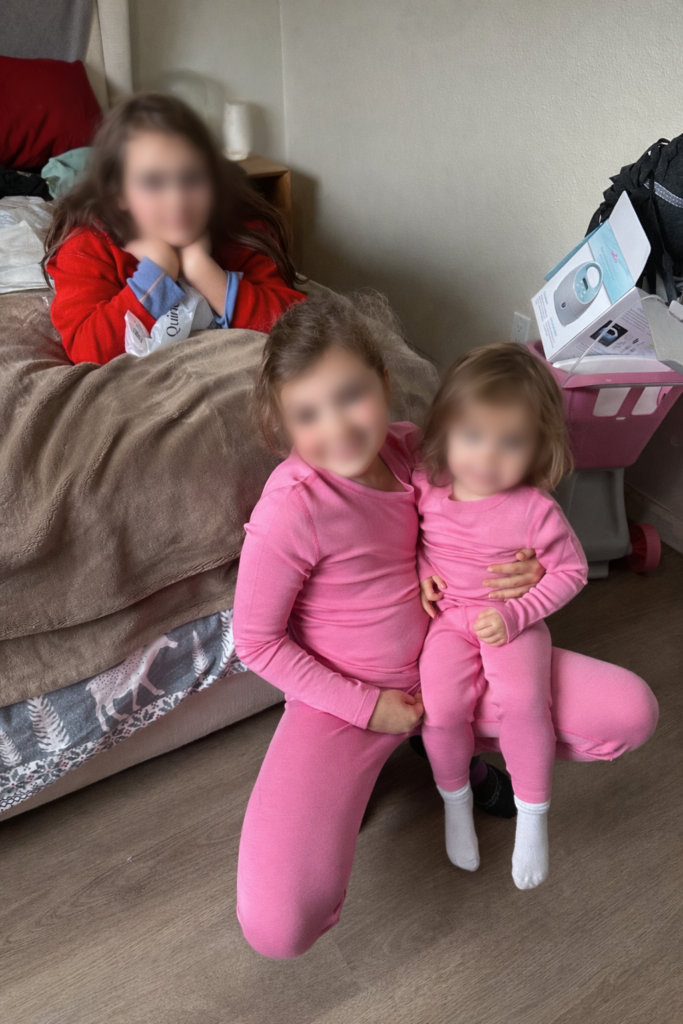
Which fiber should you choose?
Merino wool (best all-around for most families)
Merino is popular for a reason: it’s warm without being bulky, handles sweat well, and is comfortable across changing temperatures (classic “kid runs hot then freezes” situations). It’s also naturally odor-resistant, which is… honestly a gift when you have kids.
Alpaca (best for people who get the “prickle response”)
If merino makes you itchy, irritated, or reactive, you’re not being dramatic — some people simply don’t tolerate wool well. Alpaca is often better tolerated because it does not contain lanolin, which is a common trigger. It can be a great swap for adults (especially men) who refuse base layers because “it itches.”
Cotton (useful, but not ideal for snow/sweat)
Cotton can work for warm sleepers or mild climates, but it tends to hold moisture — so for snow days, sweat, or all-day wear in cold weather, merino (or alpaca) usually performs better.
Base layers for kids & teens: what actually works
For kids, success usually comes down to three things:
- Comfort (no scratchy feel, no weird seams, no “tight neck” drama)
- Fit (long enough legs/arms; snug but not suffocating)
- Repeatability (you need enough sets to rotate without laundry panic)
Merino.tech (our most practical family set option)
For winter and snow days, Merino.tech has been one of the most practical “works for most people” options in our house — warm, wearable, and priced in a way that doesn’t make you afraid to let your kids exist as kids.
Quince (thin, but helpful — especially as a first buffer layer)
Quince merino base layers have been a useful middle-ground option for kids. They’re thinner than premium merino brands, but still do the job as a first layer under regular clothes.
Fit note: sizing can run short in the legs for some kids. If you’re between sizes or your kid is long-limbed, sizing up is usually the safer move.
Hello Night Kids (toddler win — high quality)
For toddlers, I’ve had the best luck when I stop trying to “make do” and just get something genuinely well-made. Hello Night Kids has been one of the highest-quality toddler merino finds I’ve seen — especially their thermal base layers and merino zip pajamas.
Fit note: toddler merino often runs small. If you’re unsure, sizing up usually avoids the “ankles suddenly above the calf” problem.
Base layers + sleep: the high-contact category people forget
If you’re focusing on base layers, sleepwear belongs in the conversation because it’s one of the longest-wear, highest-contact categories — and kids’ sleep temperature swings are real.
Woolino (merino base layers + sleep + toddler bedding)
Woolino is both a base layer brand and a sleep brand — and they’re especially strong for babies/toddlers and sensitive sleepers.
If you want merino in the highest-contact categories (sleep + first layers), Woolino is one of the simplest “one brand can cover multiple needs” options. Their merino pieces are breathable, temperature-regulating, and practical for families who want fewer synthetic layers in the mix.
- Base layers / everyday merino: great for layering under sweaters, jackets, and snow gear (especially for littles).
- Sleep: merino sleep sacks and sleep layers are a genuine game-changer for toddlers who run hot/cold.
- Bedding: we’ve had excellent experiences with their toddler pillow (wool interior with cotton cover). We pair it with a silk pillowcase and it’s been a win.
Shop Woolino + Get $10 Off Your First Order
Base layers for adults: practical, premium, and “please don’t make me itch” options
Merino.tech (adult sets)
Merino.tech is also a solid practical option for adults — especially if you want warmth without spending premium-brand prices.
- Women crew thermal set (Merino.tech)
- Women zip thermal set (Merino.tech)
- Men crew thermal set (Merino.tech)
Icebreaker (premium merino upgrade)
If merino works for your skin and you want a noticeable upgrade in finish, durability, and overall “this feels like a real garment” construction, Icebreaker is a solid premium option. I’ve bought my husband corespun pieces from them and he’s lived in them — warm, well-finished, and easier for picky adults to tolerate.
Shop Icebreaker (referral link)
If merino doesn’t work: alpaca options (two routes)
If you get the prickle response from merino, or wool triggers irritation or respiratory sensitivity, you don’t need to “power through.” You need a different fiber.
Option 1: Alpaca on Amazon (Arms of Andes)
These are good options to try if you want alpaca base layers with easy ordering/returns, especially for men who are wool-sensitive.
- Men’s alpaca zip top (Arms of Andes)
- Men’s alpaca crewneck (Arms of Andes)
- Men’s alpaca base leggings (Arms of Andes)
- Women’s alpaca zip base layer top (Arms of Andes)
Option 2: Alpaca via ShopMy (Paka)
If you want alpaca pieces beyond strict “base layer sets” — like hoodies and crew sweaters that still function as warm, skin-friendly layers — Paka is a brand I’m watching and recommending. This ShopMy collection is under menswear, but it’s useful for anyone shopping alpaca layers.
Shop Paka alpaca layers (ShopMy collection)
How many base layers do you actually need?
You don’t need a drawer full. You need enough to rotate without losing your mind.
- Kids: 2 sets each is a great start (3 if you’re in constant snow season).
- Toddlers: 2–3 sleep or base options depending on laundry rhythm.
- Adults: 1–2 sets is usually enough unless you’re outdoors daily.
Best beginner move: start with base layers for the coldest/highest-contact season (winter/snow + sleep), then expand only if it truly improves life.
Quick reminders (so this stays sane)
- Comfort wins. If a fiber starts a nervous system war, it’s not helping you.
- Fit matters more than brand. Too tight = miserable. Too loose = cold and bunchy.
- Zip tops can be a game-changer for adults and for nursing/postpartum seasons.
- Kids grow fast. Don’t overbuy in one size unless you love donating money to the growth-spurt gods.
Related reading
- Clean Clothing Swaps: What’s Actually Worth Replacing (and What’s Not)
- Branwyn Merino Review: Two Years In, Through Pregnancy, Postpartum, and Real Life
- How to wash merino wool without ruining it
This post is for educational purposes only and is not a substitute for individualized medical advice.