
I worked this one out in Northern Ireland, in a stretch where my kids would eat black beans three ways and no others. Refried, cooked down with a ham bone, or cultured.
Cultured is the one I kept, and not only because it tastes the best of the three. My own gut was in a rough state in those years and beans were one of the things it would not take straight. Soaked overnight, pressure cooked properly and then left to culture, they went down without any trouble at all. The method below is really just the shape of what I had to do to be able to eat them.
The rest of it is practical. A sealed jar sits in the fridge for a long stretch without spoiling, so I make a big batch and put it into jars, and the jars go faster than I plan for. I gave up cooking beans on the stovetop years ago because I kept burning them, and burnt beans are a smell you do not forget.
Why the method looks like this
Every stage here is taking a pass at the same problem, which is that dried beans are hard work for the digestion until they have been properly handled. The overnight soak starts it. The pressure cook finishes it, and that is the step that carries the most weight, as beans of this family are rough on anybody when they are undercooked. The culture then goes after the oligosaccharides, which are the sugars beans are famous for, and it leaves you with live organisms on top of everything else.
If legumes have never sat well with you, this is the preparation worth trying before you decide you are done with them. It is what makes beans possible for a lot of people who had given up, and I count myself in that. It does not work for everybody, and that is worth finding out about yourself rather than pushing through and hoping.
What is in it, and why
- Black or turtle beans. Fiber, folate, magnesium and potassium in a form that keeps. Cooked and then cooled, some of the starch turns to resistant starch, which feeds gut bacteria rather than arriving as sugar.
- Cultured onion brine. This is the starter, and it is what makes this a cultured food rather than a wild ferment. The two words get used interchangeably and they do not mean the same thing. A wild ferment waits on whatever microbes happen to be on the food and in the room, which is how sauerkraut works and it works beautifully. Culturing means handing the job to a starter you already have going, so the jar comes out the same every time. My method for the cultured onion brine is here.
- Roasted garlic. Sweeter and rounder than raw, without the hard edge raw garlic gives a cold dip. It also brings inulin, which is a prebiotic fiber.
- Lime juice. Brightness, and it drops the pH at the start, which puts the culture on the right footing from the first hour.
- Cumin. Traditional alongside beans in more or less every cuisine that eats a lot of them, and that is not an accident. It is a carminative, the old word for a spice that settles gas.
- Salt. More than seasoning here. Salt is what lets the lactobacillus establish ahead of the organisms you do not want, so the amount is deliberate and it is doing a job.
- Cilantro. The fresh top note against the earthiness of the beans. If it tastes like soap to you, that is genetic and you are not imagining it, so use parsley.
- Avocado oil. Poured over the top it makes an airtight seal, which is what keeps the jar anaerobic. It also stays liquid in the fridge better than olive oil does, which matters when the jar goes back in cold.
The kit
An 8 quart electric pressure cooker and a 14 cup food processor do all of this, and both live on my counter rather than in a cupboard because they earn the space. They are on my kitchen list along with the clip-top jars.
Some of these links earn me a small commission. It does not change what you pay, and I only list things I actually use.
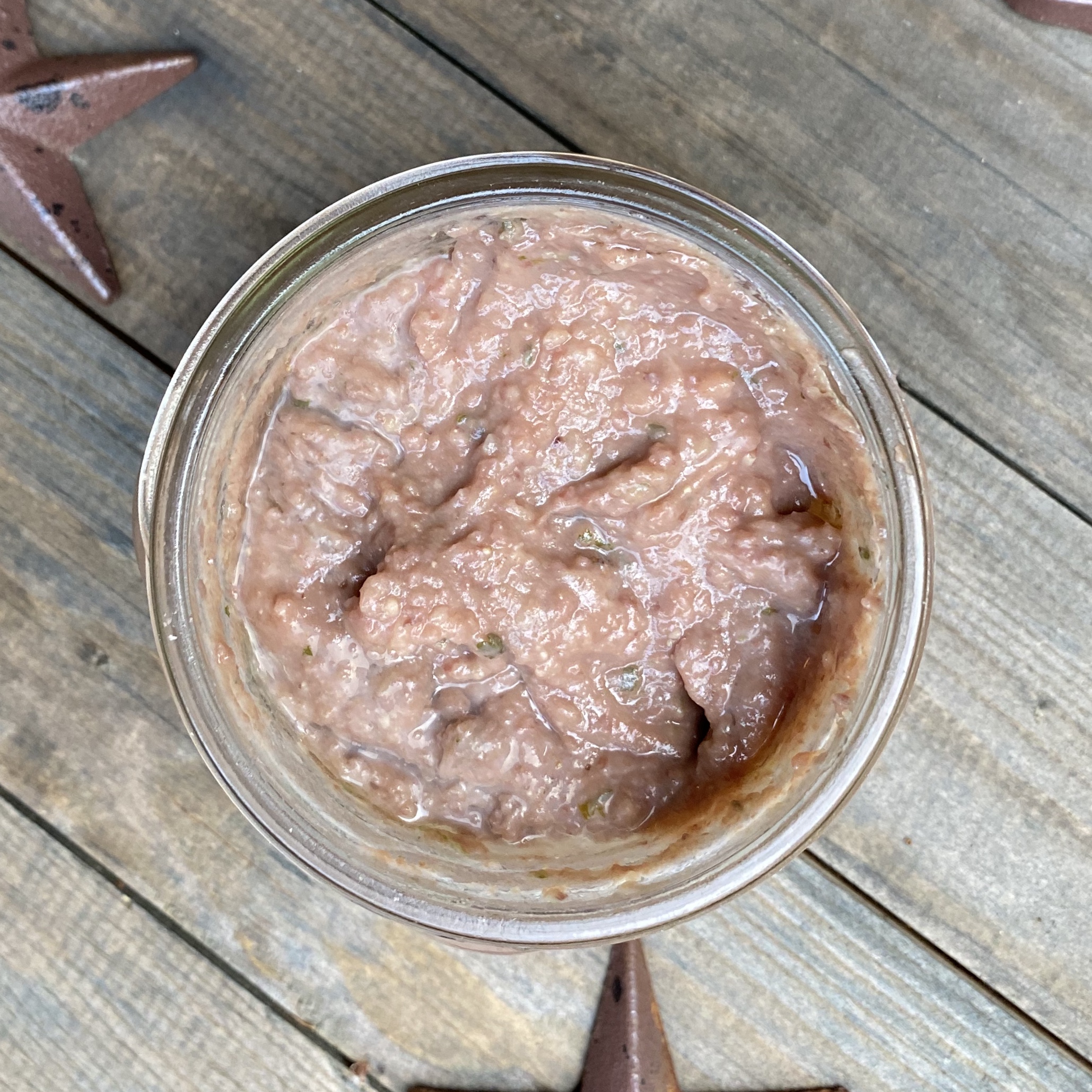
Cultured Black Bean Dip
A live-cultured bean dip that keeps under an oil seal, started on brine rather than left to a wild ferment.
Conversions are approximate. Whole foods vary.
Nutrition — fiber and folate in a form that keeps for weeks, which is worth more than a perfect meal you have no time to cook.
Digestion — prepared this way beans sit far better than they do out of a can, and the live culture is a real addition rather than a garnish.
Do not shorten the soak or the cook. This is the step that decides whether the beans sit well, and it is also the step people cut. Soak overnight, throw the soaking water away, and give them the full thirty minutes under pressure.
Ingredients
For the dip
- 250 g dried black or turtle beans
- 6 cloves roasted garlic, fresh is fine
- 0.5 cup cultured onion brine, onions included is fine
- 0.25 cup lime juice, about two limes
- 0.5 bunch cilantro, leaves and thin stems
- 1 tsp ground cumin
- 1 tbsp pink salt
- 0.5 tsp black pepper
To seal and serve
- Avocado oil, a quarter to a half cup, enough to cover the surface
Method
- Weigh the beans into a container, cover them with water by a couple of inches, and leave them to soak overnight.
- Drain and rinse, and throw the soaking water away. Cover with fresh water and pressure cook for 30 minutes.
- Drain, keeping about a cup of the cooking liquid back to loosen the dip if it needs it. Put the beans in the food processor.
- Add the roasted garlic, onion brine, lime juice, cilantro, cumin, salt and pepper. Leave the avocado oil out at this stage. Process until smooth, adding the reserved liquid a little at a time.
- To serve straight away, stir in 2 tbsp of the avocado oil, spoon into a bowl, and serve with crudités or chips.
- To culture it, transfer to a clip-top jar of at least two quarts and pour the avocado oil over the top. Clamp it closed and rotate the jar slowly until the oil covers the whole surface.
- Leave it 2 to 3 days. It is cultured after 24 hours, and the bite gets stronger and the culture livelier by the second and third day. If this is new to you, start at one or two days.
- Stir the oil through and store it in a quart jar in the fridge.
Minerals
Folate — high. Black beans are one of the better plant sources of it.
Magnesium — moderate. From the beans.
Iron — present, and non-heme. The lime juice alongside it helps the absorption.
Qualitative, read off the ingredients rather than computed. Numbers will follow when this recipe is mapped into the meal engine.
Notes and swaps
Use a jar at least one and a half times the volume of what you are putting in it, and double is better. Too small and it climbs out over the counter.
I usually double this and run 500 g of beans, as the work is the same either way.
Turtle beans and black beans behave identically here.
Parsley in place of the cilantro if cilantro tastes like soap to you.
Under the oil in the fridge it keeps a long time. A jar has never lasted long enough in this house for me to find the limit.
Brenna May Wellness
Where I get these
The avocado oil and the salt I buy through my own dispensary rather than from a marketplace. With shelf-stable things especially, I want to know the seller has not changed since last time and that what is in the bottle is what is on the label.
The rest of the pantry is there too, along with the household cleaning and skincare I actually use. Browse the whole dispensary.
Some of these links earn me a small commission. It does not change what you pay, and I only list things I actually use.