
This post reflects personal experience only. It does not make medical claims or provide medical advice.
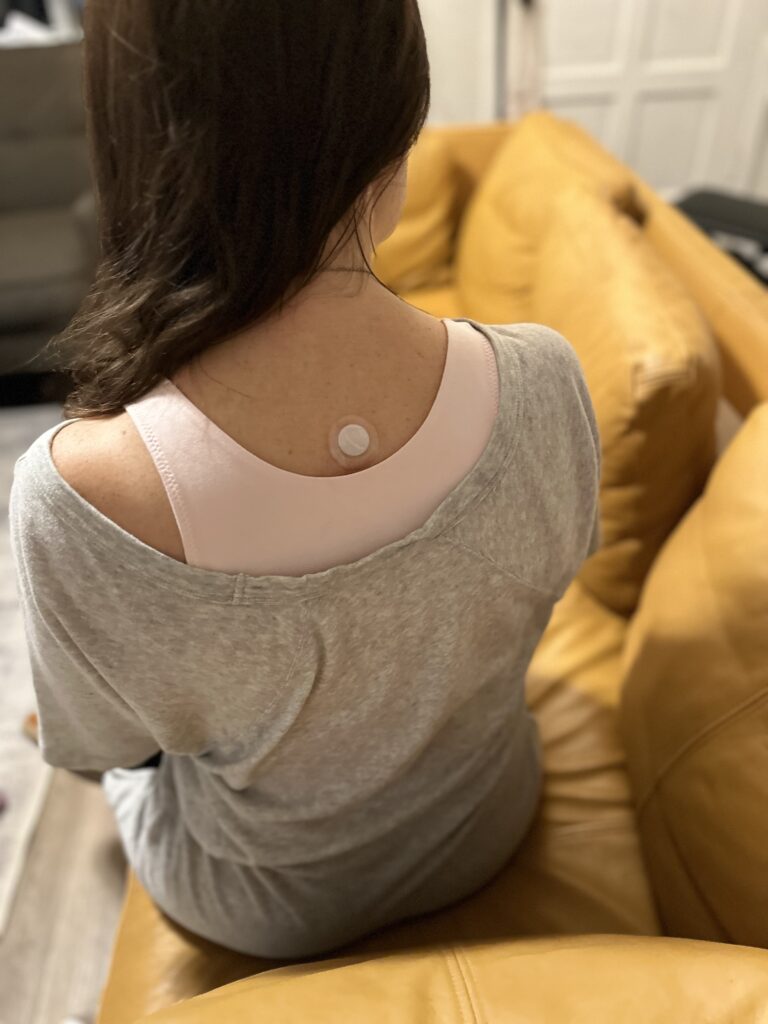
Why this caught my attention (and why I still waited)
I didn’t rush into trying LifeWave patches. I’m cautious by nature—especially with anything that comes with strong testimonials and financial commitments.
What first got my attention was a conversation with a close family friend—someone I’ve known since I was a kid. She mentioned her sister had seen big shifts in autoimmune-related lab markers after using the patches for several weeks.
I didn’t take that as proof. But I did take it seriously, because I trusted the source—and I filed it away.
The part most people don’t see: I didn’t try this on a “good week”
By the time I finally tried LifeWave in early June 2024, I had been dealing with an extremely painful SI joint injury for about six weeks.
Quick clarity: the SI joint is the sacroiliac joint—the connection where your spine (sacrum) meets your pelvis (ilium). It helps transfer load from your upper body into your legs, so when it’s irritated, normal life can feel impossible: standing, walking, rolling in bed, getting in and out of a car, picking up a baby.
I was largely on my back. And I had already tried the conventional route:
- Chiropractic care (limited benefit)
- Physical therapy (more helpful, but I still wasn’t back to normal)
I was still in a lot of pain.
For context, I’ve had four babies, been thrown around by horses, and played collegiate lacrosse on a fractured foot for six months. I have a high tolerance for discomfort. This injury stopped me.
What happened when I finally tried it
When I put the patches on, I wasn’t expecting anything dramatic. I was simply tired of being stuck.
What surprised me was the speed of the shift:
- Within a few hours: my back pain was noticeably reduced.
- Within a day: it felt much less intense.
- Within three days: I was walking without soreness.
- Within a week: I had almost forgotten the pain entirely.
The most meaningful part wasn’t “pain scale math.” It was that my body stopped guarding. I wasn’t bracing, compensating, or moving like everything might snap again.
The postpartum layer that mattered just as much
I delivered my youngest baby on July 25, 2023, and that pregnancy was physically demanding. I had a lot of bed rest, frequent Braxton Hicks contractions, and felt weak throughout.
After delivery, the weakness didn’t bounce back quickly. I couldn’t squat down to pick up my baby without holding onto something to pull myself back up. My joints felt unstable. My ankles were sore and felt inflamed when I woke up.
In the weeks after starting the patches, those things quietly disappeared. Not dramatically. Not all at once. Just… gone.
Five days in: the part I didn’t expect
By day five (July 12, 2024), I noticed something specific: strength. I could squat down holding Alyssa (almost 20 lbs at the time) and stand back up without feeling wiped out. That might sound small, but postpartum it’s not small.
Around the same time, I realized I was drinking less coffee. I’d been having a caffeinated cup in the afternoon consistently, and I just… didn’t need it. I dropped the afternoon caffeine unless I wanted a Swiss water decaf because it’s cozy. I went from about four cups a day to two. I still really like coffee 😜☕️
I also noticed better focus, less stiffness, and more flexibility. I was already using supplements that supported focus, but the experience made me want to simplify and see what my baseline felt like with less layering.
What I am (and am not) claiming
I’m not claiming LifeWave patches treat injuries, autoimmune disease, or postpartum recovery. I’m not telling you what to do.
I’m simply documenting what happened in my body—after six weeks of being stuck, and after trying other approaches first.
The change wasn’t conceptual. It was functional.
A quick note on “how these work” (in plain English)
LifeWave describes their patches as non-transdermal photobiomodulation patches—meaning nothing is meant to “enter” the body like a drug or cream. The idea is that the patch interacts with the body’s own light/energy signals and is worn externally for up to a set number of hours.
With X39 specifically, LifeWave’s published research focuses on a measurable marker: GHK-Cu (a copper peptide) and reports increased levels in a double-blind study over one week. GHK-Cu is composed of three amino acids (glycine, histidine, lysine) bound with copper.
That detail matters because it helped me make sense of something I saw at home: my husband didn’t notice much at first (even with X39, X49, and IceWave in the mix), and I started to wonder whether his baseline “raw materials” were part of the story. When I later supported him with liver capsules (which are rich in nutrients like copper and amino acids), that’s when he began to notice more.
To be clear: that last part is my personal theory based on our experience—not a claim that patches “require” specific nutrients or that everyone will respond the same way. It’s simply an observation that made the mechanism feel more plausible in real life.
Why I still use them
I still use the patches because I feel more resilient when I do. Recovery feels smoother. My body feels less reactive.
I don’t see them as a replacement for foundations. I see them as something that can layer on top of them.
LifeWave reference link:
https://www.lifewave.com/BrennaMay
Related reading
I’ve also documented how LifeWave fits into my thyroid story over time, alongside red light therapy and research context.
Brenna May
Functional wellness research & lived experience
This post is for educational purposes only and does not constitute medical advice.