
Not medical advice. Educational only. If you have severe pain, swelling, redness, warmth, one-sided leg swelling, shortness of breath, or a personal history of clotting disorders, talk to your clinician promptly.
The short version
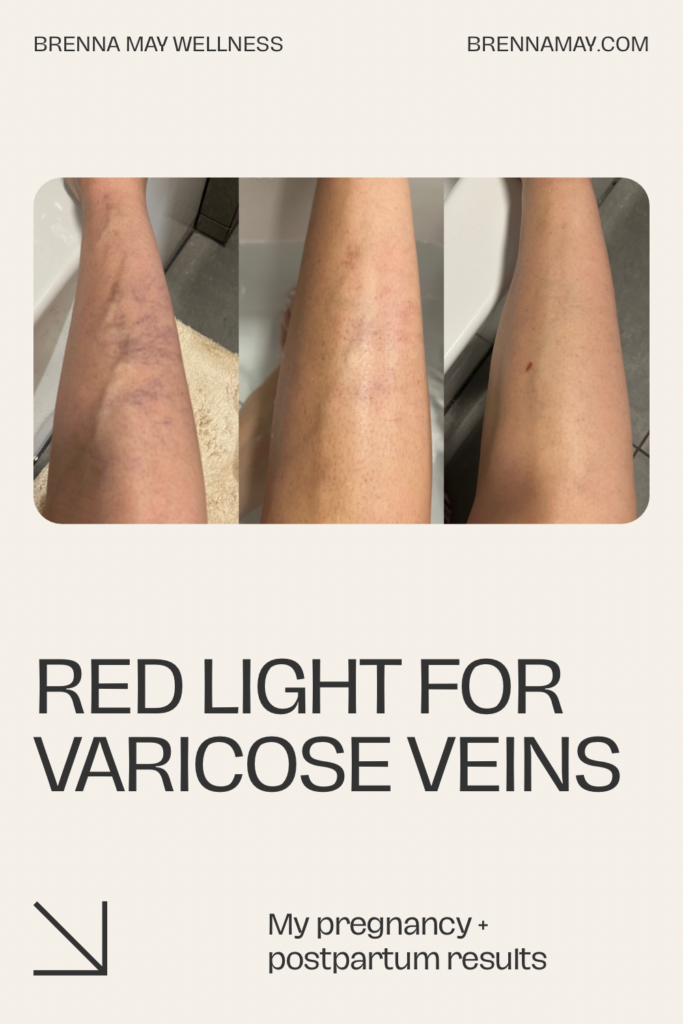
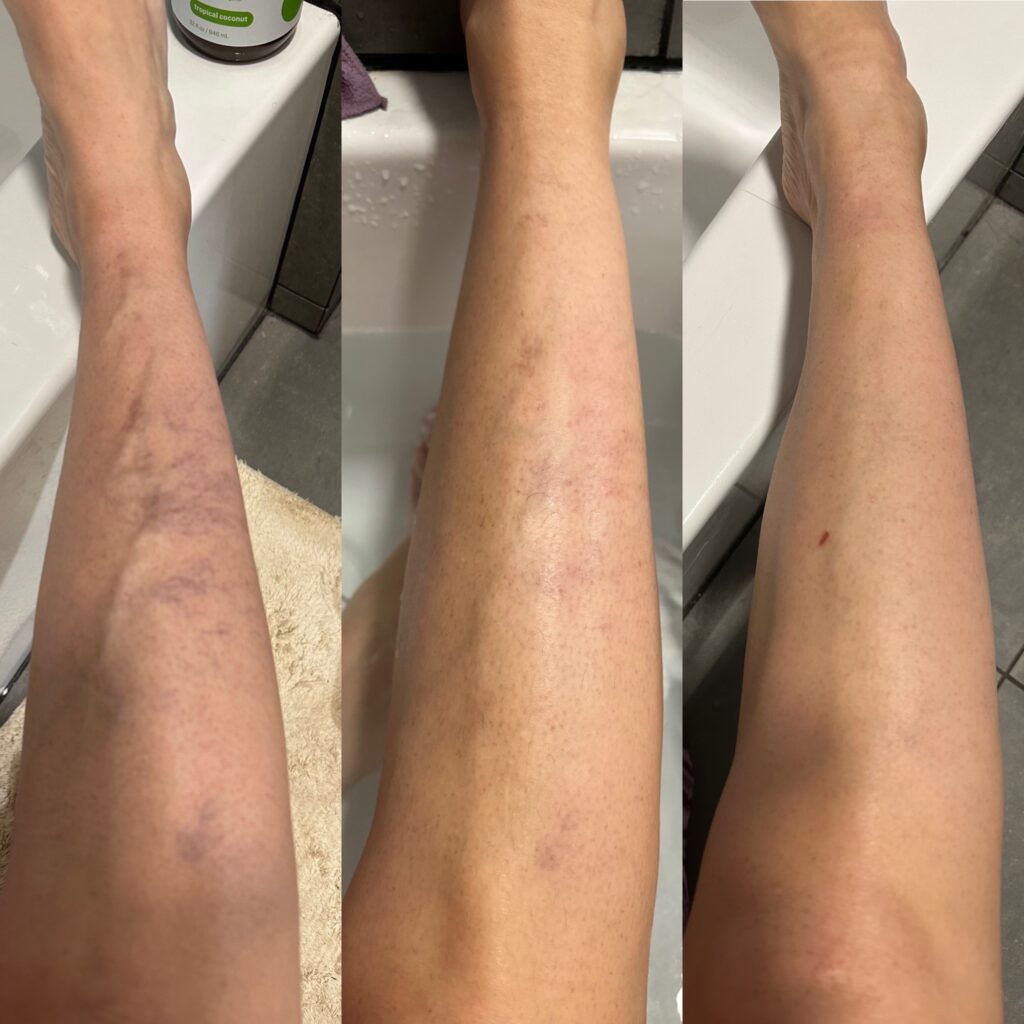
I developed painful varicose veins and spider veins during the second half of my pregnancy (this was my “surprise baby” pregnancy, and I was over 40). I had never dealt with this in my earlier pregnancies.
I tried essential oils and they may have helped a tiny bit… but the honest truth is: red light therapy is what moved the needle. I used it every day, sometimes twice a day, for 10–60 minutes. The veins started improving during pregnancy, and after delivery + daily red light, they resolved over the next few weeks.
Why pregnancy can trigger varicose veins (and why it can feel so dramatic)
During pregnancy, your circulatory system is doing Olympic-level work: more blood volume, more pressure, more pelvic congestion, more hormonal influence on vessel tone, plus the physical “traffic jam” effect as baby grows. For some women, that shows up as new varicose veins and spider veins—especially later in pregnancy and postpartum.
The frustrating part is that these veins aren’t always just “cosmetic.” They can ache, throb, burn, itch, or feel heavy—especially after standing, chasing kids, or at the end of the day.
What I used (and what I didn’t)
What I did use
- Red light therapy consistently (daily; sometimes twice daily)
- Basic “don’t make it worse” support: hydration, mineral support, legs up, and not pretending I was 25
What I did not use (by design)
- I did not add heavy herbal or supplemental protocols for veins because I was pregnant and then breastfeeding a newborn. I wanted the simplest, lowest-risk lever first.
- I did use essential oils (more on that below), but they were not the main event.
Why red light therapy made sense (mechanisms in plain English)
Red light therapy is also called photobiomodulation (PBM). In research settings, PBM is studied for how it may support:
- Microcirculation (helping tissues get oxygen and nutrients more efficiently)
- Nitric oxide signaling (one of the body’s natural “vessel relaxation” messengers)
- Cellular energy (ATP) via mitochondrial pathways (aka: giving tired tissue more “battery”)
- Collagen and tissue remodeling (important when we’re talking about vessel walls + surrounding connective tissue)
Are there massive, perfect clinical trials showing LED panels erase postpartum spider veins in every woman? No. But there is a meaningful body of PBM research around circulation, tissue repair, and cellular signaling that makes the pregnancy/postpartum vein story biologically plausible. And in my case, the practical outcome was obvious.
What the Research Actually Supports (So Far)
Direct clinical trials on consumer red light therapy “eliminating” varicose veins in humans are extremely limited. Most published evidence is mechanistic (blood flow / nitric oxide signaling) or involves related vascular outcomes rather than definitive vein closure.
Important distinction: Clinical vein procedures (medical lasers/sclerotherapy) work by physically closing veins. LED-based photobiomodulation (PBM) is different—its strongest evidence is around circulation, vasodilation, inflammation modulation, and tissue repair, which may help how veins look and feel over time, without claiming it repairs faulty vein valves.
Human Trial: Endothelial (Blood Vessel) Function
- Photobiomodulation and endothelial function (healthy volunteers; flow-mediated dilation). This controlled crossover trial assessed endothelial function using ultrasound-based flow-mediated dilation.
PubMed: PMID 37072603
Mechanistic + Vascular Function Evidence (Why Blood Flow May Improve)
- 670 nm red light and nitric-oxide–linked vasodilation via extracellular vesicle signaling. Demonstrates nitric oxide–dependent vasodilation with 670 nm red light and explores a transferable vasoactive signal.
PubMed: PMID 34049180 - In vivo photobiomodulation study (670 nm) showing improved perfusion/blood flow in a leg ischemia model. Not a varicose-vein trial, but directly relevant to “blood flow improves in the leg” mechanisms.
PubMed: PMID 35586710
How This Relates to Varicose/Spider Veins
If red light made your veins visibly improve, the most plausible research-supported explanations are:
- Improved microcirculation + vasodilation: better flow dynamics can reduce pooling and “pressure look.”
- Reduced local inflammation: less tissue swelling can make veins appear less prominent.
- Enhanced tissue repair signaling: PBM is widely studied for cellular energy and repair pathways.
Bottom line: The science currently supports PBM as a tool that can improve vascular function and blood flow (and potentially symptoms/appearance). It does not yet prove at-home LED devices permanently reverse the structural valve dysfunction behind varicose veins.
Note: Those PubMed links are primarily mechanistic (how vessels/cells respond to NO and light-related pathways), not “varicose vein LED panel RCTs.”
My real-life red light protocol for pregnancy/postpartum veins
Frequency
- Daily (minimum)
- Twice daily when they were especially painful or angry
Session length
- 10–60 minutes depending on the day
- Most days were somewhere in the middle, but consistency mattered more than perfection
Where I targeted
- Directly over the painful varicose areas
- Over visible spider veins
- If you’re doing a larger panel, I like overlapping zones so you’re not “spot treating” only one square inch of tissue
What I watched for
- Less aching/heaviness first
- Less ropey “inflamed” look next
- Cosmetic fading after that (the slowest part)
Safety notes (pregnancy & breastfeeding)
This is not individualized medical advice. That said, one reason I leaned on red light was because it felt like a low-intervention tool compared to throwing a supplement cabinet at a pregnant body.
- Avoid heating the belly for prolonged periods (common-sense pregnancy rule)
- If you feel overheated, dizzy, or “off,” shorten the session
- If you have a history of clotting disorders, significant edema, or unusual pain/swelling—loop in your clinician
- Be cautious with photosensitizing medications (ask your prescriber)
What about essential oils?
I did use essential oils, and I’m not here to villainize them. In my case, they were more like supportive background music—nice, but not the main storyline.
If you’re pregnancy or breastfeeding, be conservative. Topical dilution matters, and some people are more sensitive postpartum. If you want to try them as comfort support, think “gentle,” not “aggressive protocol.”
Supportive options (helpful, but I didn’t personally use these postpartum)
If you’re not pregnant/breastfeeding, or you’re working with a practitioner who knows your situation, these can be helpful adjuncts for vein tone and circulation:
Bioflavonoids
- Diosmin + Hesperidin (commonly used in Europe for venous support)
Herbal supports
- Butcher’s broom (Ruscus aculeatus)
- Horse chestnut (not pregnancy-friendly; use professional guidance)
- Gotu kola (Centella asiatica; context-dependent)
Important: Many “vein herbs” are not one-size-fits-all—especially in pregnancy, breastfeeding, clotting risk, or when combined with medications. When in doubt: keep it simple and ask someone qualified.
Optional supplement supports (Fullscript)
If you want to explore diosmin/hesperidin or other practitioner-grade options, you can shop my Fullscript dispensary here: Fullscript Dispensary
My favorite red light options (what I’d point a friend to)
If you’re choosing a device, the best one is the one you’ll actually use consistently. A giant panel doesn’t help if it lives in the closet like an expensive drying rack.
Shop my recommended red light tools
- Bon Charge (my go-to panels): Shop Bon Charge here
- Therasage (great panels, strong brand reputation): Shop Therasage here
- HigherDOSE (their red light blanket is a “use-it-while-existing” option): Shop HigherDOSE here
What I’d do if I were starting today (the “don’t overcomplicate it” plan)
- Daily red light for 10–20 minutes over the problem areas for 2 weeks.
- If pain/heaviness is improving, keep going. If not, consider increasing toward 30 minutes or adding a second short session.
- Add basic lifestyle support: hydration + minerals, legs up, walk, avoid prolonged standing, consider compression socks (if tolerated).
- If you’re not pregnant/breastfeeding and you want extra support, layer in a simple venous support option (not 12 things at once).
Related: red light therapy for thyroid health
If you want the thyroid side of my red light story, I wrote it up here: Red Light Therapy for Thyroid Health (coming soon)
Email: brenna@brennamay.com
Website: www.brennamay.com
Fullscript: Order professional-grade supplements
This post is for educational purposes only and is not a substitute for individualized medical advice.