
For someone who has run a food blog for the better part of eight years, it’s borderline ridiculous that I’ve never written down my chicken soup. Probably because it’s not fancy. It’s just what we do.
I Instant Pot a whole organic chicken. Usually organic. Sometimes pastured. I’m more careful about chicken than I am about ruminants. Chickens are basically tiny dinosaurs with questionable life choices. They cannibalise each other, eat garbage, and carry viruses that do all sorts of charming things metabolically. So yes, maybe buying organic makes me feel better. Pastured is best… you want them eating all the worms and grubs and insects to get the best Omega balance. But also… I grew up on a farm. I’ve seen things. They’ll eat whatever is thrown their way and in a factory setting that can be both reprehensible and disgusting.
I also hate waiting. And despite years of Sunday roasts (upside down, then flipped halfway through like some domestic penance ritual), I’m still not emotionally attached to roasting chickens properly. The Instant Pot wins. If we are serving it for dinner I’ll just extract it into a pan and put it into the oven to broil for 5 minutes.
Step One: Cook the Whole Bird
I put the offal/giblets in the bottom of the Instant Pot so their nutritional goodness gets into the broth. Fresh or frozen works. I do this a day ahead when I’m organised, and on the same day when I’m not, which is often.
Once the chicken is cooked, I pull it out, let it cool a bit and then pick the meat off the bones. For a family of six, most of it goes straight into the soup. Sometimes I’ll reserve some shredded chicken for sandwiches or another meal. It’s versatile.
This is my daughter’s favourite food when she’s not feeling well. And right now, as we navigate what looks very much like celiac, there have been a lot of soothing soups and meat stocks happening over here. So yes. A lot of chicken.
Step Two: Make the Broth (Low-Histamine Friendly)
After the meat is picked off, the bones go right back into the Instant Pot, along with the skin, carcass, and giblets. Water to cover. That’s it.
I don’t add a bunch of vegetables to my bone broth because I don’t want to increase histamine issues. This is another great reason to use an Instant Pot: you can get rich, gelatinous broth without a long simmer.
Pressure cook again, strain, and set the broth aside. It should gel in the fridge, which to me is the selling point. That gelatinous goodness has all the best healing qualities.
Step Three: The Actual Soup
This is where it turns into “real food” and not just broth.
I sauté the base vegetables—onion, celery, and carrots (mirepoix, if we’re being French about it)—usually in homemade ghee. Sometimes avocado oil if that’s what’s closest. Then I add minced garlic and season generously.
- Onions: 1–2
- Carrots: 5–10
- Celery: a thick bunch
- Potatoes: 5–8 (Yukon Gold preferred; scrubbed russets if that’s what’s affordable)
I always keep the potato peels on. Even for mashed potatoes. That’s where a lot of the nutrition lives, and I’m not peeling minerals off for aesthetics.
Seasoning depends on the mood, but the steady anchors are pink salt and Kirkland’s no-salt organic seasoning (used with enthusiasm). Sometimes I add onion powder, garlic powder, rosemary, Italian seasoning, or herbs de Provence.
Then I add the stock… and I add the shredded chicken right then too.
Yes, it cooks another 30 minutes.
No, I’m not worried about “overcooking” it. I am not opposed to killing that chicken twice or even three times. This isn’t restaurant food. This is healing food.
Simmer about 30 minutes, or until the potatoes are tender and everything tastes like it belongs together.
Starch Alternatives (If You’re Out of Potatoes)
Potatoes are our default. Yukon Gold if possible. Russets if that’s what’s affordable. Peels on. Always.
But this soup is flexible.
If you’re out of potatoes or want to switch it up, here are reliable options:
- Basmati or jasmine rice: cook separately and add to bowls, or simmer directly in the broth until tender.
- Gluten-free pasta: Bionaturae fusilli holds up surprisingly well in soup and doesn’t disintegrate immediately.
- No starch at all: we’ve done this plenty of times. It’s still deeply satisfying.
Some seasons call for more carbohydrate support. Some don’t. Adjust accordingly.
The Nutritional Therapist Take
I’m a Nutritional Therapy Practitioner, so yes, I think about this soup differently than most people.
First, protein. A whole chicken gives you muscle meat, connective tissue, skin, and offal. That means collagen, glycine, proline, minerals, fat-soluble nutrients, and actual complete protein. This isn’t just “light comfort food.” It’s structurally supportive food.
Second, broth matters. When you pressure cook the bones and skin, you extract gelatin and minerals in a way that’s efficient and (in our case) more histamine-friendly than a 24-hour simmer. That gelatin supports digestion. It also makes the broth set like a proper stock in the fridge, which is a glorious feature.
Third, vegetables count, even if they’re not raw, and often especially.
My daughter recently told her doctor she “doesn’t eat vegetables.” Which was news to me. Apparently in her mind, vegetables meant salads and crudités. Meanwhile, we eat onions, carrots, celery, potatoes, and garlic constantly, just mostly in soup or roasted in winter.
Cooked vegetables are still vegetables. In fact, for many people, especially anyone with gut irritation, they’re often easier to digest and absorb.
This soup covers a lot of ground nutritionally:
- Protein for repair and immune support
- Collagen and glycine for gut lining support
- Minerals from bones and vegetables
- Electrolytes from properly salted broth
- Steady carbohydrates from potatoes for nervous system stability
It’s not trendy, biohacked or complicated.
It’s foundational nutrition.
And sometimes foundational food is the most therapeutic thing you can make.
Instant Pot Whole Chicken Soup
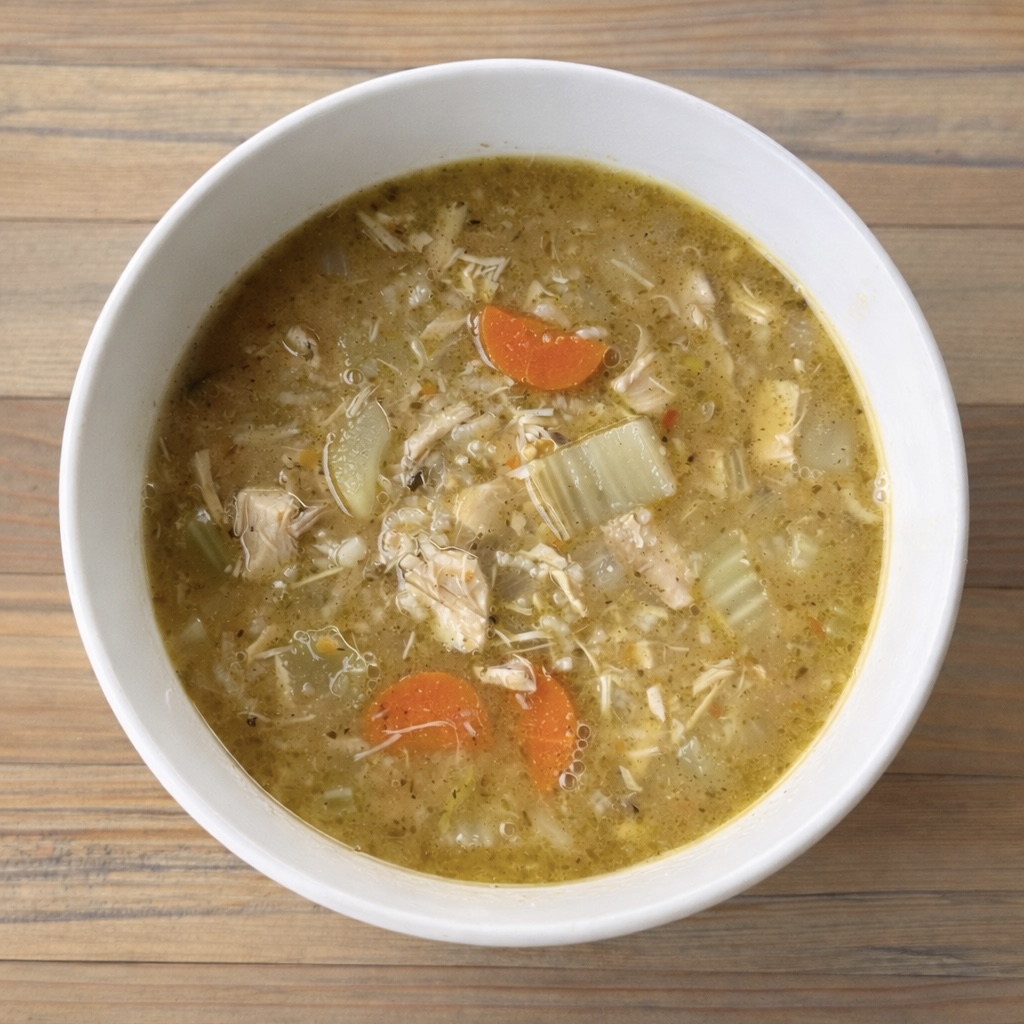
Ingredients
- 1 whole organic chicken (4–5 lb), giblets included
- Water to cover (about 10–12 cups total)
- 1½–2 tbsp pink salt total (divided)
- 1–2 tbsp no-salt seasoning blend (divided)
- 1–2 tsp garlic powder
- 1–2 tsp onion powder
- 1 tsp dried rosemary or Italian seasoning (optional)
- 1–2 onions, diced
- 5–10 carrots, sliced
- 1 large bunch celery, sliced
- 5–8 potatoes, cubed (peels on)
- 3–4 cloves garlic, minced
- 2 tbsp ghee or avocado oil
Instructions
Step 1: Cook the Chicken
- Salt the chicken all over (~1 tbsp).
- Season generously with no-salt blend, garlic powder, and onion powder.
- Place giblets in Instant Pot. Add chicken and 1 cup water.
- Pressure cook 6 minutes per pound (fresh) or 8 minutes per pound (frozen).
- Natural release 15–20 minutes.
- Remove chicken and shred meat.
Step 2: Make Broth
- Return bones, skin, carcass, and giblets to pot.
- Add water to cover.
- Pressure cook 45 minutes.
- Strain and reserve broth.
Step 3A: Stovetop Finish (Preferred)
- Sauté onions, carrots, celery in ghee 8–10 minutes.
- Add garlic and cook 30 seconds.
- Add potatoes.
- Pour in broth and shredded chicken.
- Add ~1½ tsp salt + 2 tsp seasoning per 8 cups broth (adjust to taste).
- Simmer 30 minutes until potatoes are tender.
Step 3B: Instant Pot Finish
- Use sauté mode for vegetables.
- Add broth, potatoes, chicken, and seasoning.
- Pressure cook 5 minutes.
- Natural release 10 minutes.
- Taste and adjust salt before serving.
Notes
Starch Alternatives (Amounts + Prep)
- Basmati or Jasmine Rice: Use ¾–1 cup dry rice for this batch size. For best texture, cook separately and add to individual bowls. If cooking directly in soup, add 1 cup dry rice and simmer 15–18 minutes until tender.
- Gluten-Free Pasta (Bionaturae Fusilli recommended): Use 8 oz (half a standard 16 oz box). Cook separately until just al dente, then stir into finished soup. If cooked directly in broth, reduce simmer time and serve promptly to prevent over-softening.
- No Starch Version: Omit potatoes entirely. Increase carrots slightly if desired. This version is lighter but still protein-rich and deeply nourishing.
Salt Adjustment Note
If you heavily salt and season the whole chicken before the first pressure cook, reduce added salt in the final soup stage and adjust gradually at the end. Properly salted broth should taste full but not sharp.
Scaling
This recipe fills a 6–8 quart pot comfortably. For larger families or leftovers, increase vegetables and seasoning proportionally. A good rule: for every additional 4 cups of broth, add ¾–1 tsp salt and 1–2 tsp seasoning blend.
Nutrition Snapshot
Calories: ~420
Protein: ~35 g
Carbs: ~28 g
Fat: ~18 g
Estimated per serving (based on 8 servings).
Magnesium: ~55 mg
Zinc: ~2.2 mg
Iron: ~2 mg
Values vary by chicken size and broth reduction.
Estimated Cost
Organic / specialty: ~$18–$22 per batch
Conventional: ~$12–$15 per batch
Based on current U.S. average pricing for whole chicken and vegetables.