
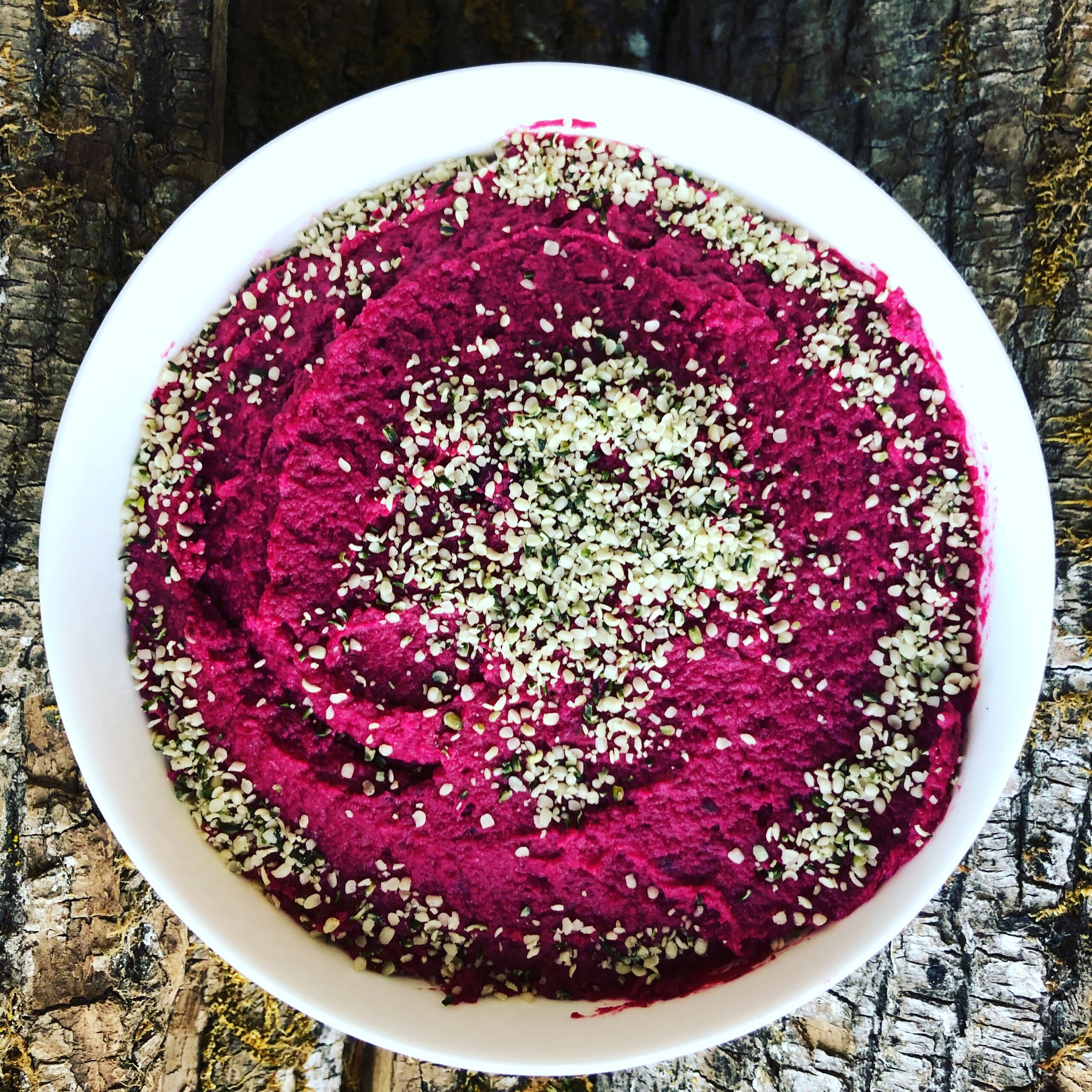
The hot-pink hummus that converts even the skeptics.
This is my favorite hummus. Full stop.
It’s the one that gets eaten first, talked about most, and quietly convinces people who “don’t like beets” that maybe, just maybe, they were wrong.
Bright, earthy, lightly tangy, and deeply satisfying, this beetroot hummus is a nod to traditional food prep with a modern, unfussy twist. It can be enjoyed straight away or gently cultured for extra depth, digestibility, and gut support.
Jump to recipeA quick word on chickpeas (and why this works)
Chickpeas and other legumes tend to get side-eyed in paleo and keto circles, and not without reason. They naturally contain phytates and lectins, compounds that can interfere with mineral absorption and digestion in some people.
Here’s the important part:
Soaking, cooking, and fermenting legumes dramatically reduces these compounds, often by up to 80 to 85 percent. When prepared this way, chickpeas become far more digestible and nutritionally useful for many bodies.
It’s the same reason people who are lactose intolerant can often tolerate kefir or yogurt. Fermentation changes the food. The microbes do part of the work for us.
Bonus side effect?
They also become, let’s say, less musically inclined. You’re welcome.
Pressure Cooker Option (Recommended)
If you have a pressure cooker or Instant Pot, this is now my preferred method for cooking chickpeas.
Pressure cooking breaks down chickpeas more thoroughly than stovetop boiling, which improves digestibility and reduces lectins more effectively. The beans also come out softer and creamier, which makes a noticeably smoother hummus.
To use this method, soak chickpeas overnight, drain, and rinse. Add them to the pressure cooker with fresh water. Cook on high pressure for 35 to 40 minutes, then allow a full natural pressure release. Drain and rinse before using.
If your body tends to struggle with legumes, this method is worth it.
How beetroot won me over (unexpectedly)
I didn’t always love beetroot. In fact, Before Australia (or B.A., as I now refer to it), I actively avoided it.
Then I married into an Australian family.
Some foods just belong to a place, and beetroot is one of them. Sweet pickled beetroot showed up everywhere, and eventually so did beetroot hummus. One Sunday after church, my brother- and sister-in-law came home with a spread of Turkish food: warm ekmek, shawarma, tzatziki, olives, classic hummus, and a pot of shockingly pink beetroot hummus.
I fell hard.
This recipe is my own version, developed years later while we were living in Northern Ireland. It’s budget friendly, nourishing, and genuinely craveable.
Roasted vs. cultured beetroot
You can make this hummus with roasted beetroot or already cultured beetroot. Both are great. They just bring slightly different flavors.
- Roasted beetroot: sweeter, deeper, more caramelized
- Cultured beetroot: brighter, tangier, more savory
If roasting, keep it to about 1 cup. Too much caramelized beetroot tips this firmly into “dessert hummus,” which is not what we’re doing here. Ask me how I know.
Fermenting the hummus (optional, but lovely)
If you choose to culture it, the hummus will gently ferment over 48 hours. You’ll notice:
- slight expansion from natural gases
- a mellow tang developing
- deeper, rounder flavor
A layer of olive oil on top protects the surface and keeps things clean. Old-school, simple, effective.
And yes, use a jar at least double the volume of your hummus unless you want a very enthusiastic countertop situation.
Cultured Roasted Beetroot Hummus
Ingredients
- 200 g dried chickpeas, soaked overnight and cooked (about 3 cups cooked), drained and rinsed
- 1 cup roasted beetroot (from about 2 to 3 medium beets)
- 4 to 6 garlic cloves
- 1/2 cup cultured onion brine (from fermented onions or similar)
- 1/4 cup tahini (or 3 Tbsp toasted sesame seeds, or toasted sunflower seeds)
- Juice of 1 lemon
- 1 tsp cumin
- 1 Tbsp sea salt (Celtic or pink salt)
- 1/2 tsp black pepper
- 1/4 to 1/2 cup extra-virgin olive oil (used to finish and, if fermenting, to seal the surface)
Instructions
-
Cook the chickpeas:
After soaking overnight, cook chickpeas using one of the following methods until very soft.
Stovetop: Simmer in fresh water for about 90 minutes.
Pressure cooker (recommended): Cook on high pressure for 35 to 40 minutes with a full natural release.
Drain and rinse well before using. - Roast the beetroot: Wash, trim, and dice beets. Roast at 375°F for about 60 minutes, until fork-tender.
- Blend: Add chickpeas, roasted beetroot, garlic, brine, tahini, lemon juice, cumin, salt, and pepper to a food processor. Blend until smooth. Do not add the olive oil yet.
- To serve right away: Stir in 2 Tbsp olive oil, then drizzle a bit more over the top. Adjust salt and lemon to taste.
- To culture (optional): Transfer hummus to a large clip-top jar with plenty of headspace. Pour olive oil over the surface until fully covered. Seal and leave at room temperature for 48 hours. Stir the olive oil in, then refrigerate to slow fermentation.
- Storage: Keep refrigerated in a sealed container for up to 7 days. Flavor improves after a day in the fridge.
Nutrition Snapshot
Calories: ~210
Protein: ~6 g
Carbs: ~22 g
Fat: ~11 g
Estimated for a 1/2 cup serving. Will vary with olive oil amount.
Magnesium: ~55 mg
Zinc: ~1.2 mg
Copper: ~0.3 mg
Estimated Cost
Organic / specialty: $10 to $14 per batch
Conventional / mixed pantry: $6 to $9 per batch
Estimates based on typical U.S. online prices.
Comments
3 responses to “Cultured Roasted Beetroot Hummus”