
I’ve made this beef shank regularly of late. It’s one of those meals that feels slightly ambitious, yet requires very little from you once it’s in the oven.
Bone-in shank is collagen-rich and deeply savoury — but it only turns tender if you treat it properly: covered, low heat, and enough time for the connective tissue to melt.
Nutrition Goodness
Collagen + gelatin
Beef shank is rich in connective tissue. Low-and-slow cooking turns that into gelatin — the reason the broth becomes silky and restorative.
Glycine support
Gelatin provides glycine, an amino acid that supports the nervous system and recovery. It’s one of the reasons slow braises feel so grounding.
Minerals + marrow
Bone-in braises draw minerals into the cooking liquid. And if you appreciate marrow, this cut does not disappoint.
Blood sugar friendly
High-protein, higher-fat, broth-based meals tend to be steadying — a useful option so dinner isn’t just chicken breast again.
Why Beef Shank Works (And Why It Sometimes Fails)
- It is naturally tough. Shank comes from a hardworking muscle and needs time for collagen to break down.
- It needs a lid. Proper braising requires covered, moist heat (Dutch oven lid or tight foil).
- If it is chewy, it likely needs more time. When it’s ready, it pulls easily from the bone.
A Quick Note on Wine (and Real-Life Substitutions)
The classic version uses red wine, and it’s my default when I have a clean bottle on hand. That said, I’ve made this plenty of times without wine and it still works.
I’ve subbed the wine with a rosemary-heavy beef broth, and on occasion I’ve used a small splash of sauerkraut brine, Worcestershire sauce, apple cider vinegar, or coconut aminos to bring back a bit of brightness and depth.
Use what your body tolerates and what your pantry has. The method matters more than the exact liquid.
A Little Family Reality
This beef shank is a favourite of my husband and me. It’s rich, deeply savoury, and very much an adult sort of comfort food.
Our children tend to prefer something leaner and more familiar in texture. If that sounds like your household, my Classic Beef Stew is usually the winner at our table.
Same nutrient-dense approach. Slightly less richness. Fewer negotiations.
Storage + Reheat
- Fridge: 4 days. The liquid will gel when cold. That is normal (and a good sign).
- Freezer: freeze meat in its liquid for best texture (up to 3 months).
- Reheat: low heat on the stove with a splash of water or broth until silky again.
Fall-Apart Beef Shank (Oven or Slow Cook Method)
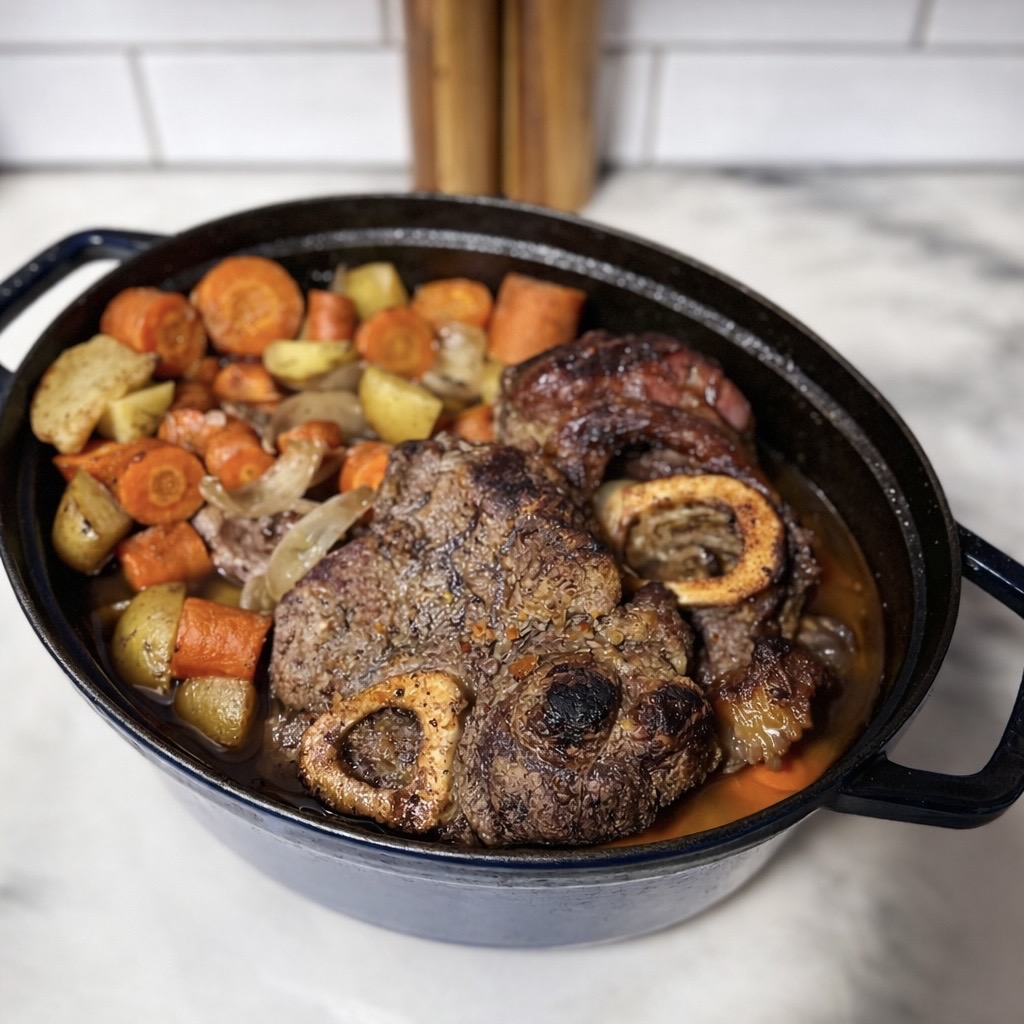
Ingredients
- 6–6.5 lb beef hind shank, bone-in
- Salt (generous) + black pepper
- 2–3 tbsp tallow or butter
- 2 large onions, sliced
- 3–4 cloves garlic (optional)
- 1/2 to 2 cups dry red wine
- 2–3 cups beef broth or water (liquid should reach 1/2–2/3 up the meat)
- 2 bay leaves
- Optional: 1 tsp Worcestershire sauce
- 4–6 carrots, cut into large chunks
- 4–6 Yukon Gold potatoes (or any potatoes), cut into large pieces
Instructions
- Preheat oven to 300–325°F.
- Salt the shank generously on all sides.
- Heat tallow or butter in a large Dutch oven. Sear until deeply browned. Remove to a plate.
- Add onions (and garlic if using). Cook until softened.
- Add wine and simmer 2–3 minutes, scraping up browned bits.
- Add bay leaves and enough broth so liquid reaches 1/2–2/3 up the sides of the meat.
- Return meat to the pot and cover tightly.
- Oven method: Braise 2 hours. Add carrots and potatoes, then continue cooking 1–2 more hours until meat is fork-tender and vegetables are soft.
- Slow cook method: Cook on low 6 hours, add carrots and potatoes, then continue 2 more hours.
- Taste and adjust salt. Remove meat from bone before serving children.
Nutrition Snapshot
Calories: ~650
Protein: ~50 g
Carbs: ~25–35 g
Fat: ~35 g
Estimated per serving. Will vary based on portion size and vegetables.
Iron: ~4 mg
Zinc: ~8 mg
Copper: ~0.4 mg
Estimated Cost
Organic / specialty: $55–$80 per batch
Conventional / Costco pack: $35–$55 per batch
Adding carrots and potatoes often stretches this into two meals, lowering the cost per serving.