
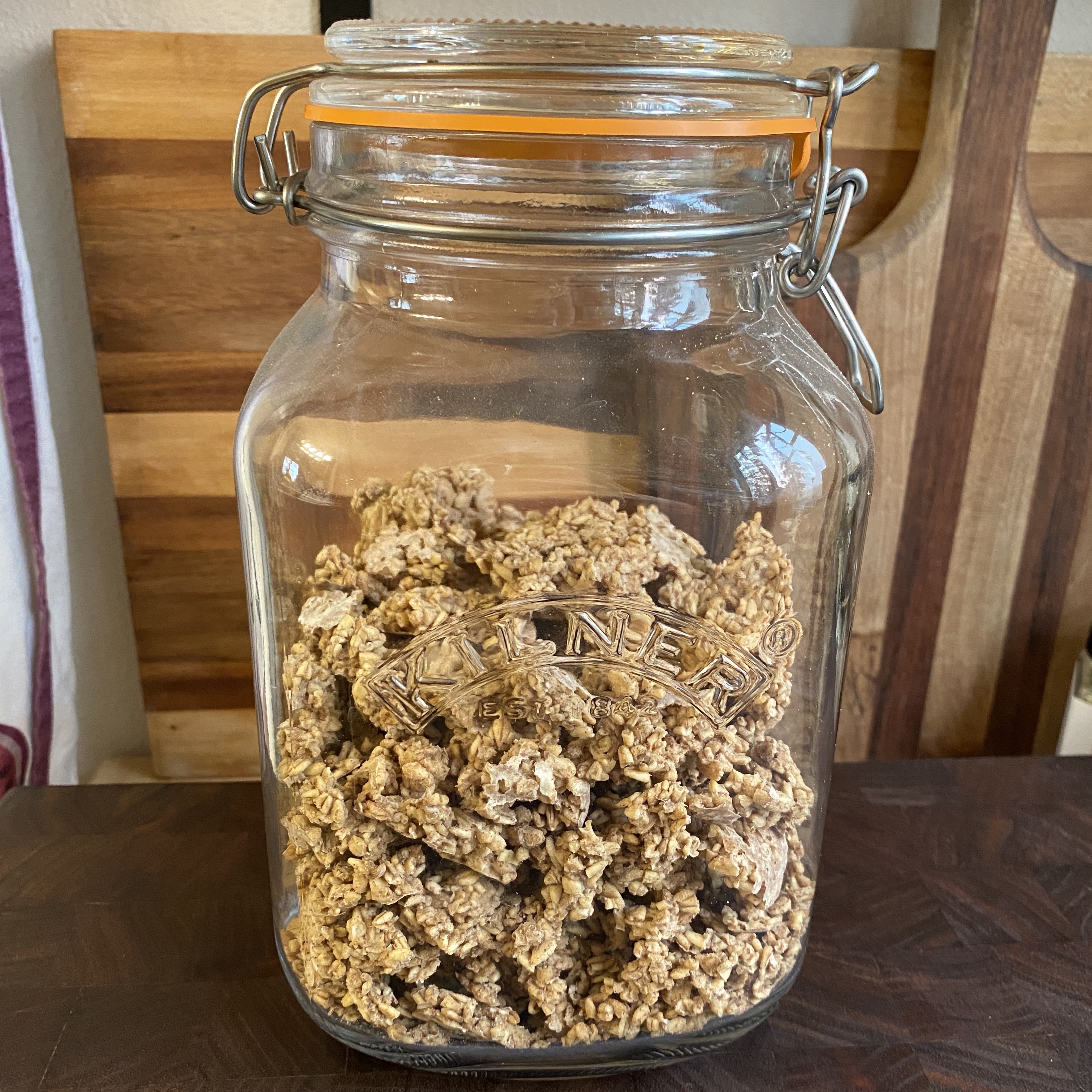
Simple Probiotic Oat Granola is one of those quiet “how are we already out of this?” recipes in our house. It takes a few minutes to mix, cultures overnight, and turns into a lightly sweet, gently crunchy breakfast that actually supports digestion instead of wrecking it.
Jump to recipeThe idea is simple: you mix oats with a live culturing liquid (like kefir, whey, water kefir, ginger beer, or kombucha) and let it sit at room temperature for about 12 hours. During that time, the microbes start breaking things down—helping reduce lectins and partially “pre-digest” the grains. They also consume some of the sweetener, which is why this doesn’t hit like typical granola.
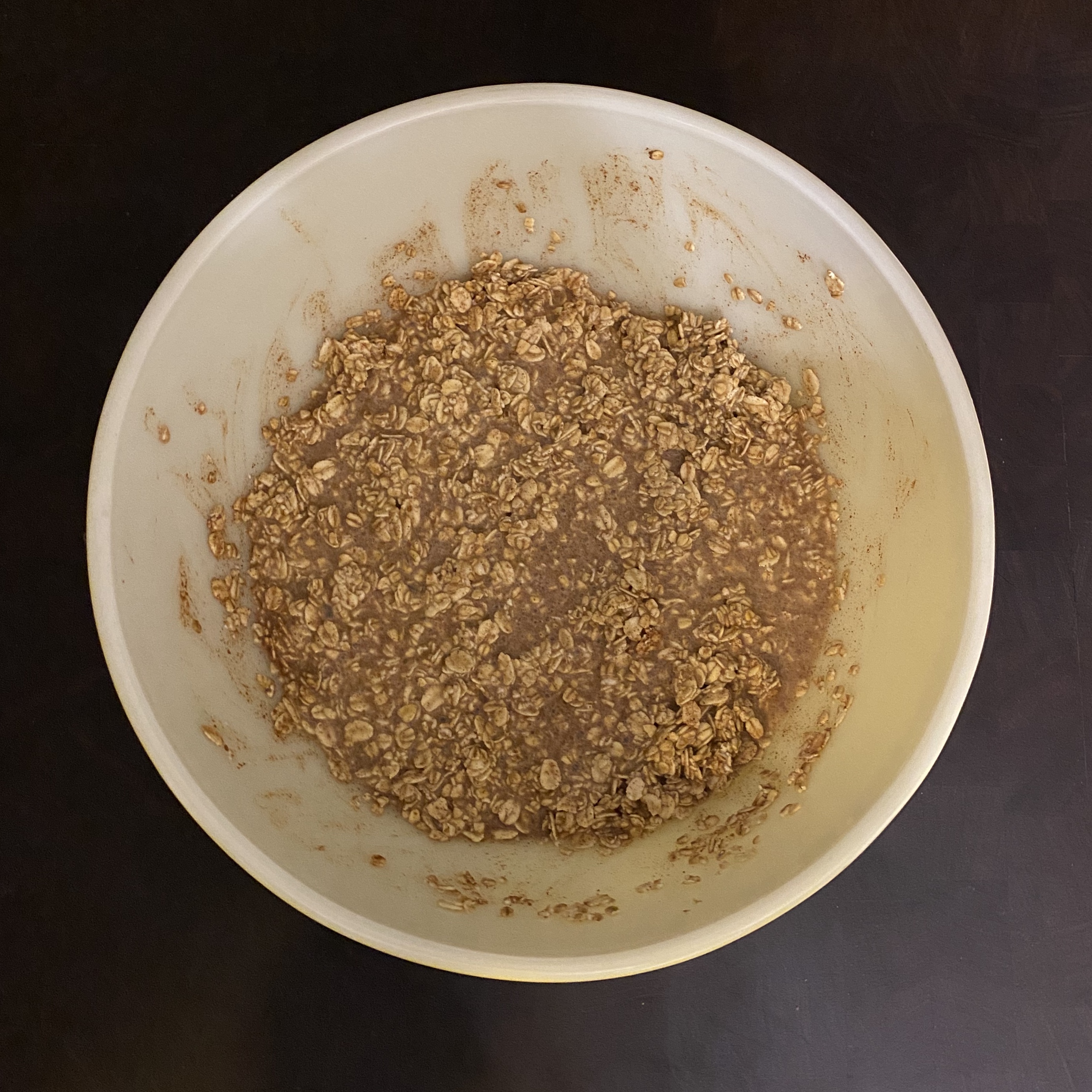
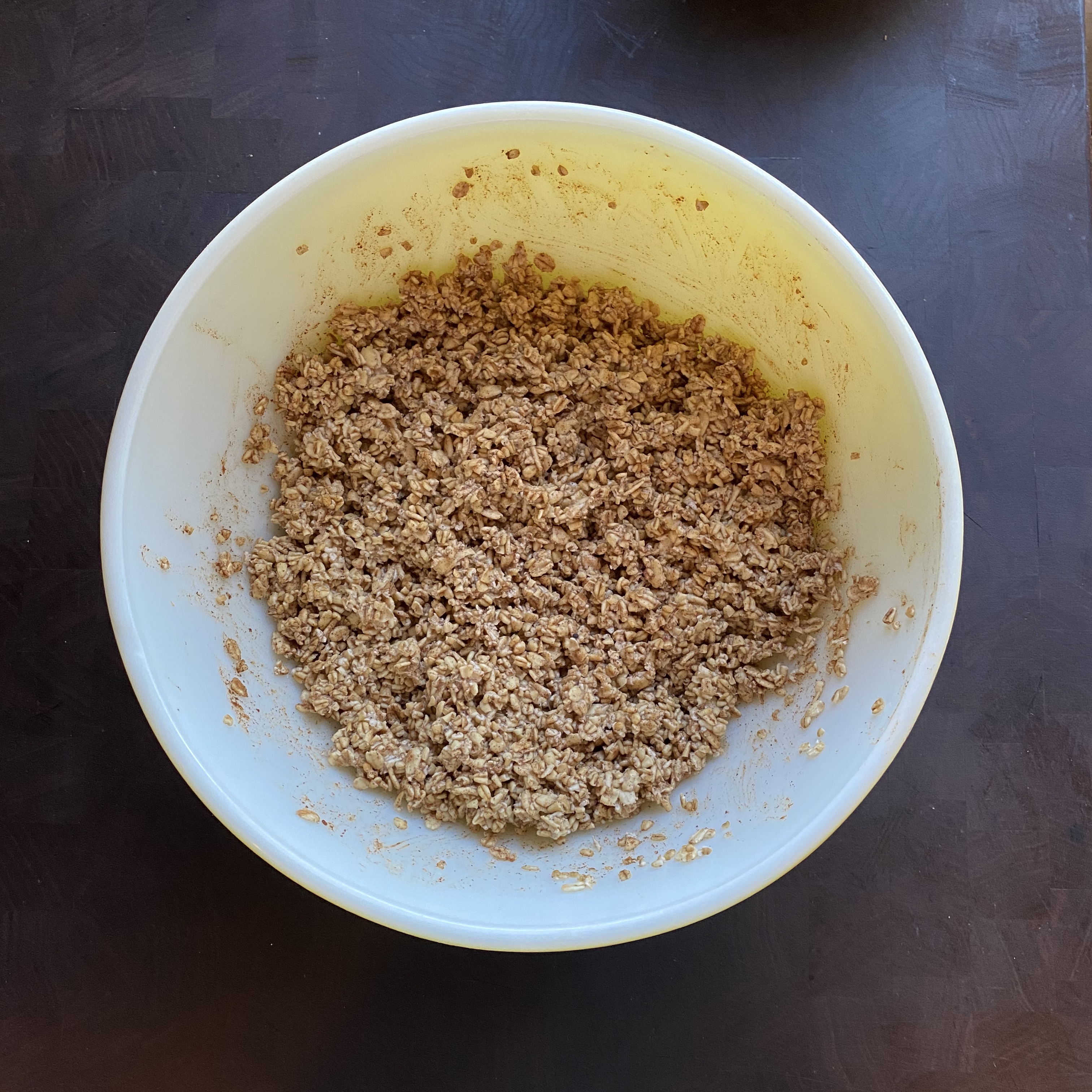
After culturing, the granola is slowly dried. If you use a dehydrator, you can preserve more probiotic activity. If you use the oven, you’ll still get a delicious granola (and the fermentation step still helps with digestibility), but higher heat can reduce live cultures. Either way, it’s a win.
Why Make Probiotic Granola?
- More digestible: fermentation supports breakdown of harder-to-digest components in grains.
- Lower sugar impact: some of the added sweetener gets consumed during culturing.
- Simple ingredients: no fillers, gums, binders, or “mystery crunch.”
- Kid- and husband-approved: which, frankly, is its own food group.
Choosing Your Oats
This recipe works with different styles of oats depending on the texture you want:
- Old-fashioned rolled oats: best if you want more clustering.
- Bob’s Red Mill Golden Spurtle oats: more rough-cut and tends to make a crumblier, muesli-style granola (this is my kids’ favorite).
- Steel cut oats: workable, but you’ll usually get a firmer, less clustered result.
Culturing Options
You have a few different ways to culture the oats, and they all work. Use what you have:
- Milk kefir (or the whey from it)
- Coconut kefir (or whey, if you strain it)
- Water kefir
- Ginger beer (naturally fermented)
- Kombucha
Honey Ferment Option
No kefir or kombucha on hand? You can also do a simple honey ferment.
Combine 1–2 tablespoons raw honey with 1 cup warm (not hot) filtered water and stir until dissolved. Use this in place of the culturing liquid and proceed as usual. Raw honey naturally contains wild yeasts and bacteria that can kickstart gentle fermentation when diluted.
Dehydrator vs. Oven
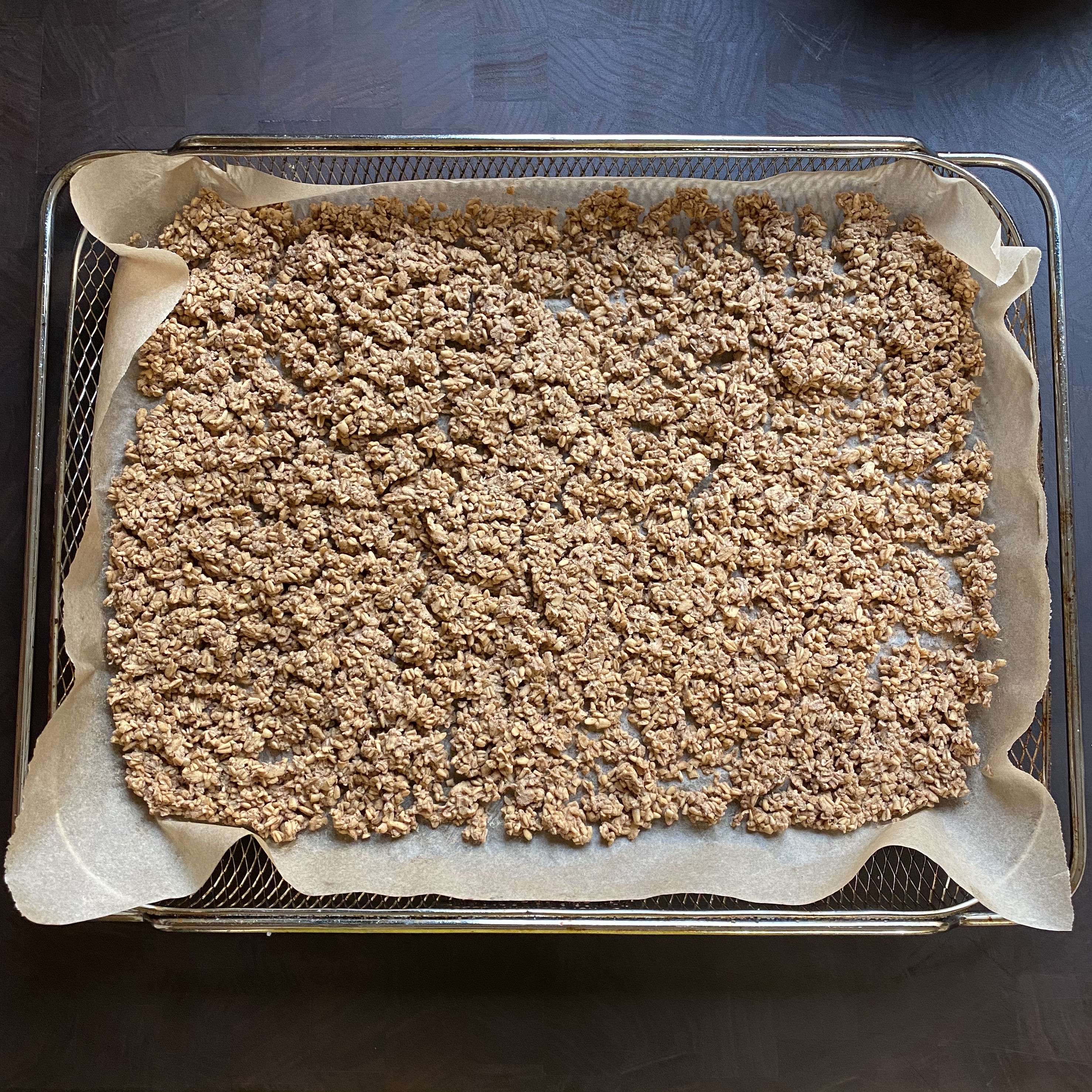
Choose Your Method
This granola is flexible by design. You can make it fully probiotic, gently dried, or just bake it like classic granola — depending on your time, tools, and priorities.
- Dehydrator (Most Probiotic):
Best if preserving live cultures matters to you. Low, steady heat dries the granola without cooking it. - Low Oven Dry (Dehydrator Alternative):
If your oven only goes down to ~170°F, you can still dry the granola slowly. This produces a great texture, but most probiotic activity will be reduced. (Still delicious. Still easier on digestion than conventional granola.) - Standard Bake (Fast + Crunchy):
For a classic granola texture, bake at a higher temperature for a shorter time. This eliminates live cultures, but you still benefit from the fermentation step for easier digestion.
No wrong choice — just different goals.
How We Eat It
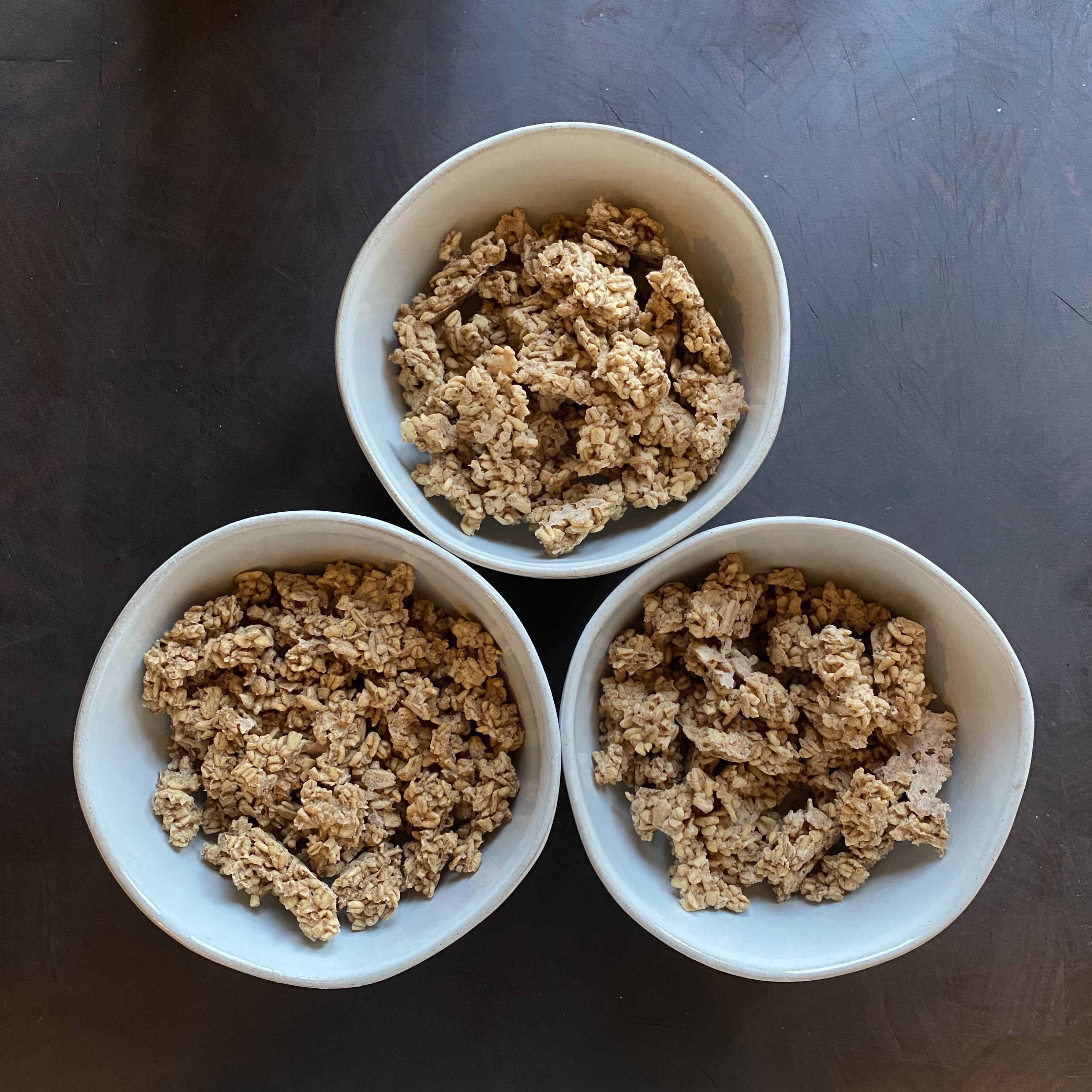
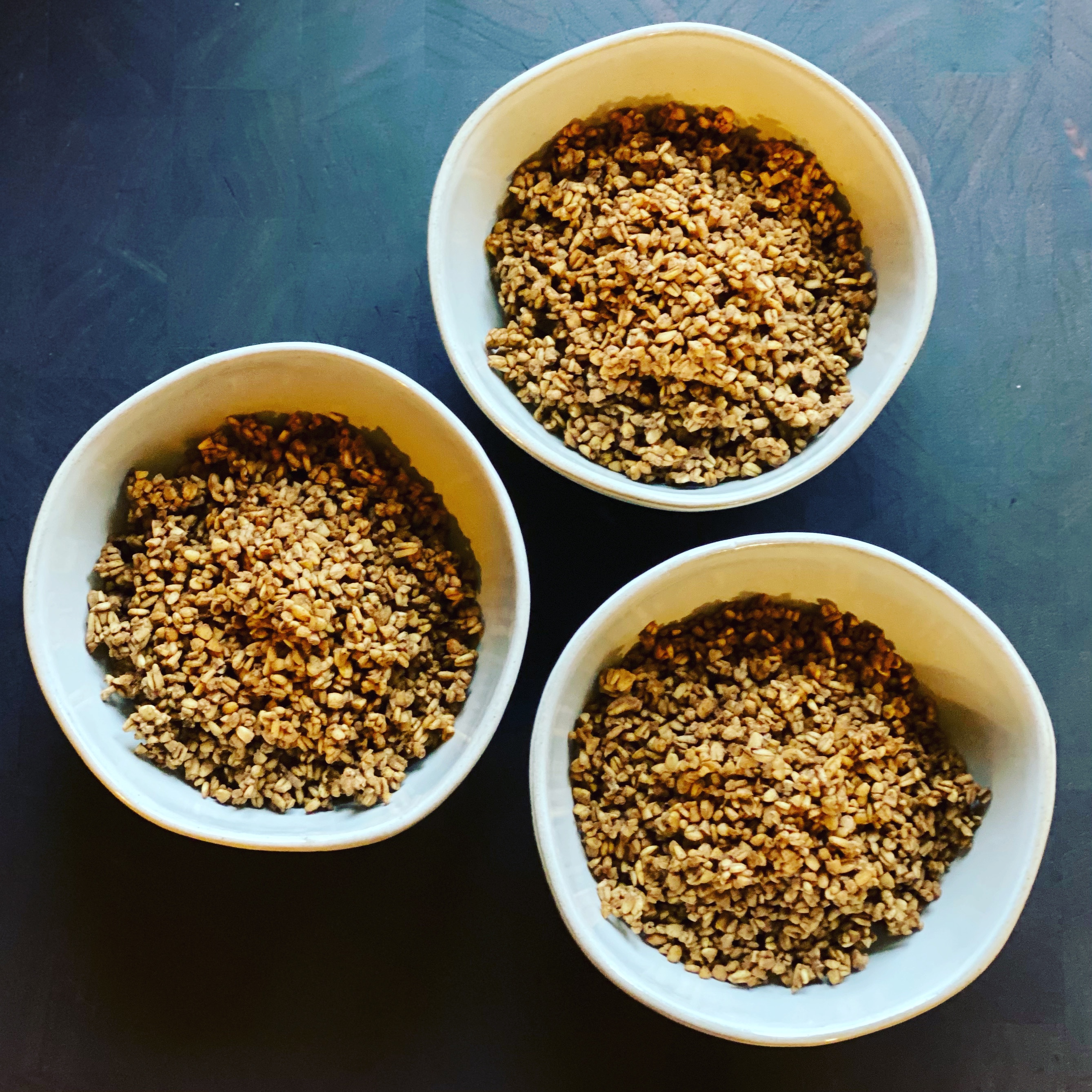
We use this as a quick breakfast cereal with milk, yogurt, or kefir, and it’s also great sprinkled over fruit or chia pudding. It stores well, travels well, and makes mornings feel a little less chaotic.
Enjoy,
Brenna xo
Simple Probiotic Oat Granola
Ingredients
- 2 cups organic rolled or spurtle oats
- 1/4 cup maple syrup or raw honey
- 1–2 Tbsp blackstrap molasses (optional)
- 2–3 tsp cinnamon
- 1 tsp mineral salt
- 1 cup culturing liquid (kefir, whey, kombucha, water kefir, or ginger beer)
- 1/2 cup melted coconut oil or avocado oil
- Pinch of pure monk fruit (optional)
Instructions
- In a large bowl, combine oats, cinnamon, salt, maple syrup (or honey), molasses (if using), and culturing liquid.
- Honey ferment option: If not using a live culture, dissolve 1–2 Tbsp raw honey into 1 cup warm (not hot) filtered water before adding.
- Stir well and stir again once or twice during the first 1–2 hours to prevent excessive clumping.
- Cover loosely and ferment at room temperature for about 12 hours.
- After fermenting, stir in melted oil and optional monk fruit. Taste and adjust sweetness.
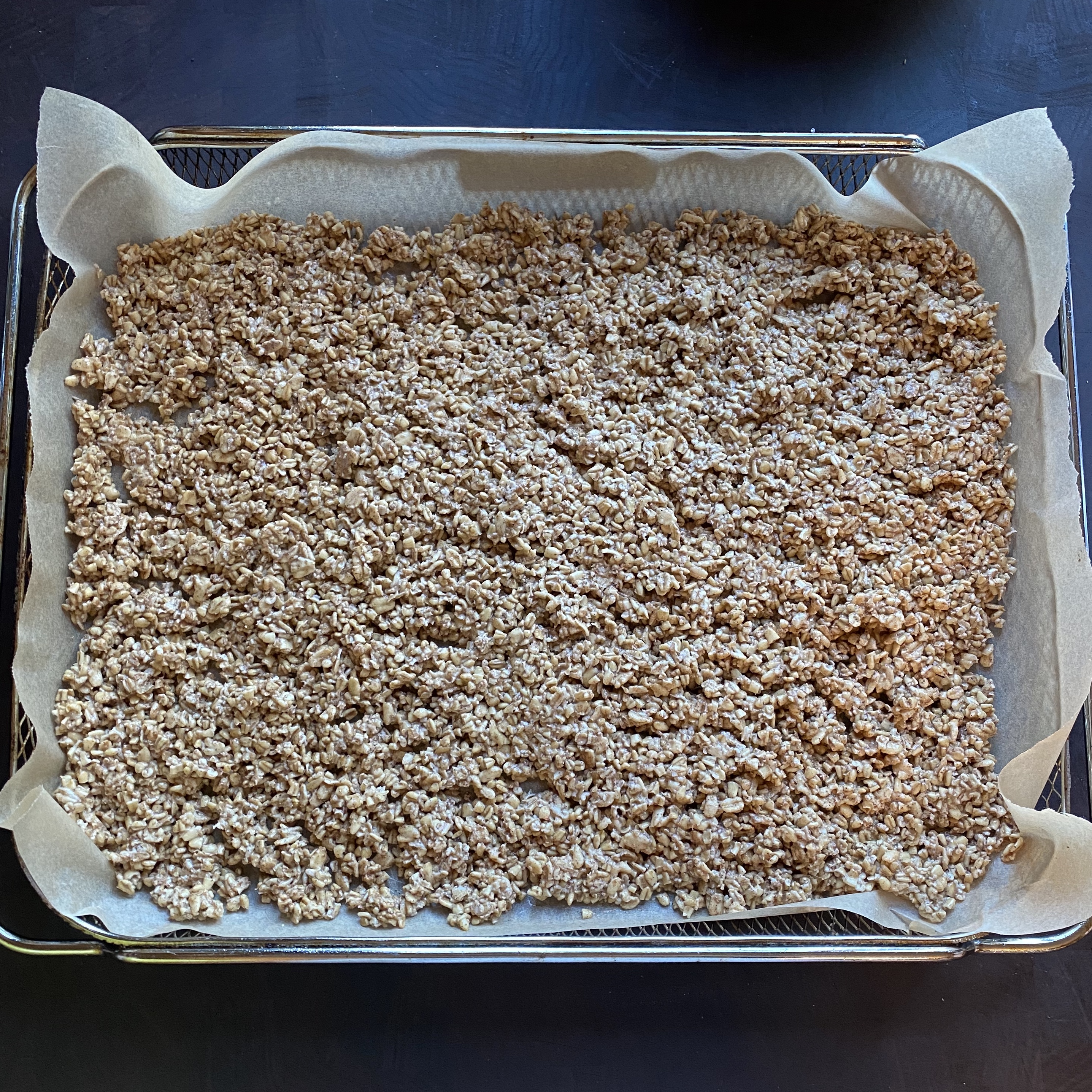
- Spread evenly on a parchment-lined perforated baking sheet or dehydrator tray.
Drying & Baking Options
- Dehydrator (110–150°F, 8–12 hours): Preserves the most probiotic activity.
- Low Oven Dry (170°F, 6–8 hours): Dries well with minimal live cultures remaining.
- Standard Bake (325°F, 25–35 minutes): Classic crunchy granola; non-probiotic.
Even when baked, the fermentation step still supports digestibility and flavor.
Nutrition (Approx. Per Serving)
Calories: ~260
Protein: ~6 g
Carbs: ~28 g
Fat: ~14 g