
Here’s my ode to living in Scotland and Northern Ireland: when you want “ethnic food,” it’s usually Indian (and often Pakistani) that shows up—whereas back in the U.S., the default craving is more likely Mexican. And because grocery stores can be a bit more limited here, this is very much a make-do-and-mend situation.
Years ago, I had a cookbook with properly authentic Indian recipes. This is not that. This is what happens when you look in the pantry, find garam masala, grab fire-roasted tomatoes, and decide your family deserves comfort food anyway.
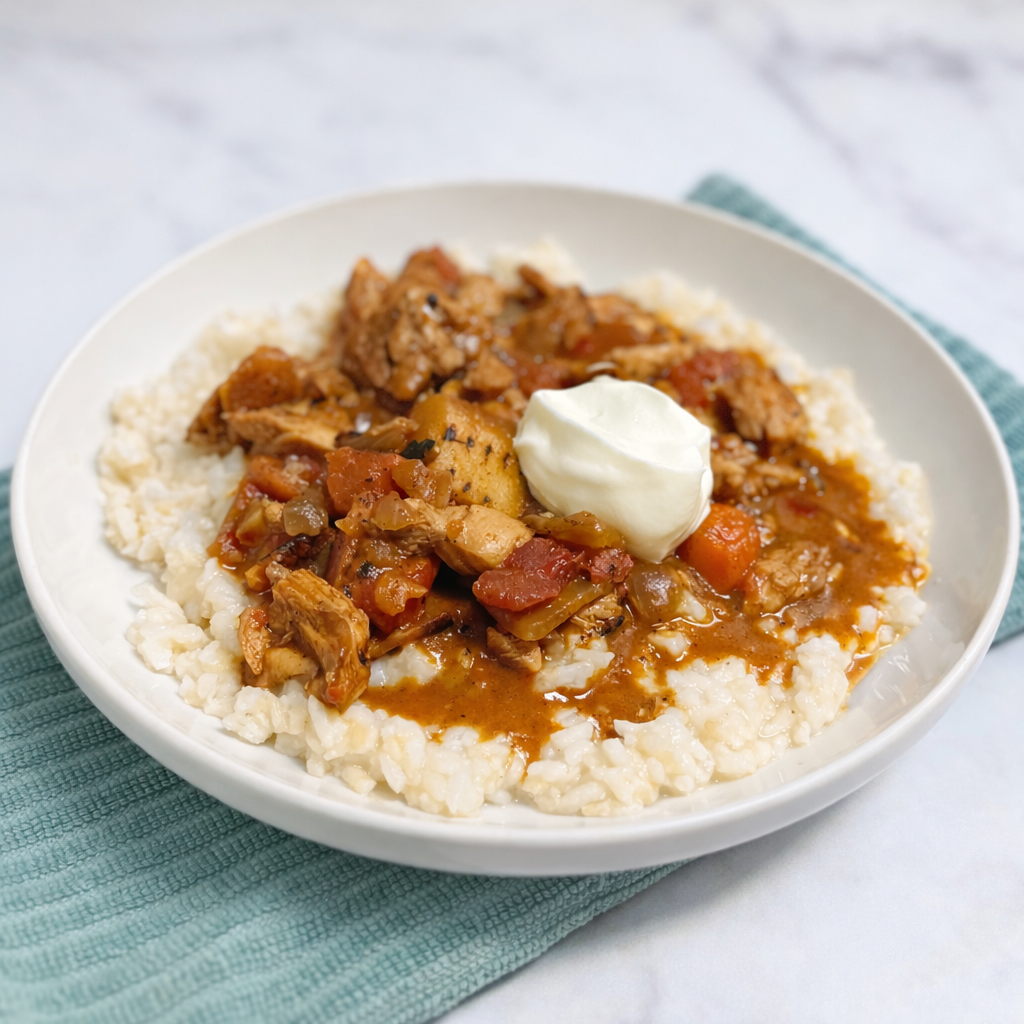
The result? A creamy, cozy, weeknight chicken situation that disappears fast in our house. My husband, teen, and toddler clean it up. The two middle girls go “extra dairy please” and add a heavy dollop of A2 yogurt on top (highly recommended, honestly).
Spice level note
Keep it family-friendly by sticking to garam masala + paprika (or skipping extra heat entirely). If your people like more kick, add a pinch of chili or a little extra garam masala at the end.
Why This Meal Works
This recipe isn’t meant to be a perfectly balanced therapeutic protocol — it’s real-life food that supports nourishment without overthinking it.
- Protein-forward: Chicken provides steady amino acids to support blood sugar stability and satiety.
- Mineral-rich fats: Ghee, butter, and coconut milk contribute fat-soluble vitamins and support absorption of the spices.
- Gentle spices: Garam masala, ginger, turmeric, and paprika offer digestive and anti-inflammatory support without overwhelming sensitive systems.
- Flexible carbs: Served over basmati rice, cauliflower rice, or legume-based couscous depending on energy needs and tolerance.
- Optional dairy: A2 cream or yogurt adds richness for those who tolerate it well, without being required.
This is the kind of meal that works because it’s adaptable — comforting enough for family dinners, flexible enough for different bodies.
From a nutritional therapy perspective, this is a solid example of pairing protein, fat, and gentle carbohydrates in a way that supports energy, hormones, digestion, and real-life sustainability.
Creamy Fire-Roasted Garam Masala Chicken
Ingredients
- 1½–2 lb chicken thighs, chopped (breasts work too)
- 1 Tbsp ghee
- 2 Tbsp butter (plus more to finish)
- 1 small onion, finely chopped
- 3 cloves garlic, minced
- 1 Tbsp garam masala
- 1 tsp salt, plus more to taste
- 1 can fire-roasted diced tomatoes, gently squished
- 1 (13–14 oz) can full-fat coconut milk
- 2 Tbsp A2 cream (optional but excellent)
Optional flavor boosters (use what you have):
½ tsp ginger powder or 1 tsp fresh grated ginger
½ tsp paprika or mild red chili powder
½ tsp turmeric
Optional add-ins:
1–2 cups pre-roasted or frozen roasted root vegetables (lightly seasoned)
Optional acidity (replaces tamarind):
1 tsp lemon or lime juice or 1–2 tsp apple cider vinegar
Instructions
- Heat ghee and butter in a large skillet over medium heat.
- Add onion and salt. Cook until soft and lightly golden, 5–7 minutes.
- Add garlic (and ginger if using). Stir 30 seconds until fragrant.
- Add garam masala plus any optional spices (paprika, turmeric). Stir in the fat for 30 seconds to bloom.
- Add chicken. Toss to coat and lightly brown.
- Add fire-roasted tomatoes. Simmer uncovered 10–15 minutes, until chicken is cooked and sauce thickens.
- Lower heat. Stir in coconut milk and A2 cream.
- Fold in roasted root vegetables if using. Warm through 3–5 minutes.
- Add a small splash of lemon/lime juice or apple cider vinegar if needed to brighten.
- Taste, adjust salt, and finish with an extra pat of butter.
Nutrition (Approx. Per Serving)
Calories: ~500
Protein: ~25–30 g
Carbohydrates: ~8–12 g
Fat: ~35–45 g
Chicken + sauce only; excludes rice, couscous, or yogurt.
Key Nutrients
Magnesium: ~50–80 mg
Zinc: ~2–4 mg
Copper: ~0.2–0.4 mg
Estimated Cost
Organic / specialty: ~$22–$28 per batch
Conventional / mixed pantry: ~$14–$18 per batch
Estimates based on typical U.S. online prices.
Cost Calculator (Edit With Your Prices)
Prices are based on online package sizes and do not account for local deals or sales. Optional ingredients are included—leave blank if you didn’t use them.
| Ingredient | Package $ | Pkg oz | Used oz | Cost |
|---|---|---|---|---|
| Core Ingredients | ||||
| Chicken thighs (or breasts) | $0.00 | |||
| Ghee | $0.00 | |||
| Butter (plus finishing pat) | $0.00 | |||
| Onion | $0.00 | |||
| Garlic | $0.00 | |||
| Garam masala | $0.00 | |||
| Salt | $0.00 | |||
| Fire-roasted diced tomatoes (canned) | $0.00 | |||
| Coconut milk (full-fat canned) | $0.00 | |||
| Optional Ingredients | ||||
| A2 cream | $0.00 | |||
| Ginger (powder or fresh) | $0.00 | |||
| Paprika (or mild chili powder) | $0.00 | |||
| Turmeric | $0.00 | |||
| Lemon/lime juice OR apple cider vinegar (acid “tamarind replacement”) | $0.00 | |||
| Roasted root vegetables (frozen or pre-roasted) | $0.00 | |||
| Optional serving items (not included in recipe cost unless you want them): rice/cauli rice, chickpea & red lentil couscous, A2 yogurt. | ||||
Total batch: $0.00
Tip: Enter rough costs (even estimates). This is about awareness, not accounting perfection.
If you make this, tag me—and if your kids insist on the yogurt dollop, please know you’re not alone. It’s a whole demographic.